


| Received | : | Oct 03, 2026 |
| Accepted | : | Oct 16, 2026 |
| Published Online | : | Online: Oct 23, 2026 |
| Journal | : | Journal of Nanomedicine |
| Publisher | : | MedDocs Publishers LLC |
| Online edition | : | http://meddocsonline.org |
Cite this article: Condition. J Plant Biol Crop Res. 2024; 8(2): 1105.
Keywords:Long-acting injection; Intramuscular injection; Subcutaneous injection; Oleogels; Liquid suspensions; Liquid crystalline systems; Controlled release; Oil phase; Lipid based excipients; Life cycle management.
Long-acting injectables have gained considerable attention in the past few years, due, in part, to greater safety, efficacy, cost effective, and less frequent dosing regimens; thus, making them ideal for chronic and life cycle management across all modalities [1]. Squibb & Sons first launched an anti-psychotic drug in 1957 [2]. In the subsequent years, many drugs have been launched as LAIs for treatment of several diseases, most specifically the anti-psychotic drugs for managing and treating the patients with schizophrenic episodes, hence, yielding improved lives. Other patient population includes those afflicted with Human deficiency Virus (HIV) and their dependent on long-acting injectable drugs with aims to lower cost and meet the patient compliance. Third category is those requiring longacting implants for sustained release of drugs over an extended period, leading to reduced pill burden with improved safety and efficacy [3].
Over 57% of long-acting drugs are administered intramuscularly [4]. Thus, the long-acting drugs serve the interest of patient population for a variety of unmet medical needs. Formulations of these drugs required the key excipients for solubility, compatibility, and safety while maintaining the extended release. Those attributes are essential for developing a robust LAI sustained release formulation to alleviate frequent dosing, as shown in Figure 1 [5,6].
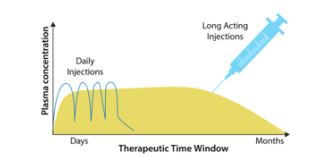
Figure 1: An illustration of long-acting vs daily dosing.
Notably, the polymer and lipid-based excipients have been used in controlling the release of drugs. In an earlier publication, we reviewed the use of nanoparticles in long-acting injectables, which is also published elsewhere [6,7]. In the present manuscript, we will be focusing on lipid or oil-based solutions and suspensions including in situ depots like oleogels among other lipid-based assemblies, as illustrated in Figure 2. It is noted that the oleogels are prepared by heating and melting of oleogel compound like 12-hydroxystearic acid with and without a surfactant to dissolve drug before cooling at room temperature.
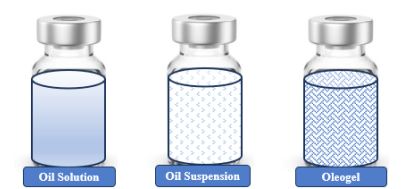
Figure 2: Oil and lipid based solution, suspension and oleogels.
 Table 1
: Oil-based marketed drugs for different therapeutic indications.
Oil and lipid based long-acting formulations
First generation of LAI drugs were simple lipid or oil-based formulations and those include medium chain triglycerides, vegetable oil, sesame oil, castor oil, cottonseed oil, coconut among others, with or without co-solvents. Many of the oilbased formulations are administered intramuscularly as drugs, prodrugs or as conjugates with aims to release slowly through passive diffusion created by concentration gradient between digestion of oil depot and tissue fluid [8]. Solubility of drugs, especially prodrugs bearing fatty acids with varied chain lengths is typical low in aqueous phase but relatively better in oil phase. Longer the fatty acid, lower the solubility and slower the diffusion though oil phase and vice versa [9]. Table 1 lists a few oilbased marketed LAI drugs [4,10,11].
As evident from Table 1, the lipophilic prodrugs are derived from conjugation of fatty acids through ester linkages. The slow hydrolysis of fatty acid yields the parent drug by the esterase cleavage. Thus, use of oil as vehicle and/or co-solvent may reduce the risk of toxicity by controlling the release from injection site to muscle tissues. These lipophilic drugs are absorbed through lymphatic uptake [12]. More hydrophilic drugs can directly diffuse in systemic circulation via lymphatic secondary depot [13].
In a recent review, Kotla et al. described the formulation strategies of classical oil-based solutions, oil suspensions, and oleogels and their respective sterilization methods, and coupled with a landscape of various oil-based formulations in clinical trials and marketed products [14].
Ler’s take a closer look into LAI intramuscular products designed with the oil-based excipients including natural and synthetic oils, oleogels, and lipid based assemblies.
Oil based LAIs
In oil based (natural and synthetic) liquid formulation, drug is often dispersed or dissolved in an oil with and without a cosolvent. These oils include castor oil, sesame oil, cotton seed oil, soybean oil, coconut oil among others. With an oil-based IM viscous formulation, patient tolerability is a primary concern. It stems from pain at the injection site leading to long term adverse effects [15]. If the lower dose is tolerable in short term, then the higher full doses are administered for long term release [16]. The viscosity of oil-based formulation plays a critical role on release of drugs when administering lower volumes with respect to in vivo clearance rate. Howard and Hadgraft (1983) observed that increasing the viscosity from ethyl oleate oil (3.9 cps) to peanut oil (39 cps), led to >2-fold increase in plasma drug concentration. Using the most viscous oil such as sesame oil in IM injection also leads to greater impact on drug release [12]. Organogels also have similar impact as highly viscous oil on controlling the release of drugs by partitioning though oil/ gel into body tissues [17].
Oil based suspensions are another alternative to oil-based LAIs. Most suspensions are aqueous based that often require reconstitution prior to injection. There are no oil-based suspensions of drugs available due, in part, to immense pain at the injection site, and also stepwise release of drug in 3 steps (i) diffuses through oil (ii) passes through oil/water interface and (iii) eventually dissolves in the aqueous phase. With water soluble molecules the partitioning of drug in oil phase is the rate limiting step. Ondansetron HCl was investigated in 3 highly viscous oil suspensions including synthetic medium chain triglycerides and natural corn oil and castor oil and was compared with their respective aqueous suspensions. The in vitro data showed that all 3 oil suspensions with high viscosity showed a significant more sustained release over 72 hours than aqueous solution under similar conditions [18].
While adding solvents like benzyl alcohol can reduce the viscosity, gelators or gelling agents can help enhance the viscosity and yield the sustained release characteristics of an oil suspension [19]. For instance, addition of methyl cholate in medium chain triglycerides, lead to controlled release of drug in vivo in rats [20]. Other gelators like silica, aluminum stearate, cholesteryl stearate, and dextrin palmitate have been investigated [21]. An oil suspension containing 2% aluminum stearate as a gelling agent in peanut oil led to slower release in vivo in humans, and furthermore, smaller particles provided more prolonged drug release after IM injection in comparison with larger particles [22].Use of organic solvents in IM formulation remains challenging. This is due to muscle damage (measure by creatin kinase, CK) when used with oil suspensions. Solvents like DMSO, NMP, and 2-pyrrolidine are highly polar and used in commercial drugs. When administered alone or in combination with saline, showed significant increase in CK, but when used in peanut oil suspensions, the CK levels were significantly lower due to forming a barrier around that prevented the direct contact of solvent with the muscle [23].
Oleogels
The oleogels are different from oil-based solution and suspensions for LAI injection. They are semi-solid materials composed of organic solvents like oil liquids, which are immobilized by physical interactions such as hydrogen bonding, van der Waal’s interaction with oleogelling agents or oleogelators [24]. The gelation can also be influenced by pH, temperature, mechanical stress, metal ions among others. Oleogels are used as a subcutaneous matrix which is comprised of drug, a cosolvent, an oil and an oleogelator. The solubilities of oleogelator can impact the quality of the gelation and hence the release profile of drug out of matrix. The stronger interactions between gelators and oil, can lead to phase separation while weak interactions can lead to formation of a continuous network, resulting in slower release of drug by diffusion from oil phase to body fluid [25]. Oleogels also reduce the chances of burst release because they form a depot with much smaller surface areas as compared to polymeric nanoparticles. For liquid injectables, two approaches are commonly used by (i) dissolving drug in oil and gelator without a cosolvent followed by heating/melting to convert get into clear liquid phase, and (ii) adding cosolvent to dissolve drug in oil for injectable liquid at room temperature. The cosolvents like NMP, which is approved in drug products, can be used that inhibits gelation at room temperature and keep the liquid avail able for injection. It also effectively disrupts the gelation of 12- hydroxystearic acid. Drug release showed that NMP can influence the release depending upon the formulations containing gelling agents in oil phase [26]. Plourde et al. observed that leuprolide in an oleogel (organosol) formulation comprised of sunflower oil and NMP with alanine as an organogelator, showed an extended release over 96 hours as compared to w/o emulsion [27]. NMP is commonly used as cosolvent in oleogels due to its hydrophilicity and biocompatibility, and ability to reduce the viscosity prior to injection. Wojtalewicz et al. on formulating bupivacaine in oleogel comprised of 3 ingredients including tripalmitin, glyceryl monostearate and geleol and medium chain triglyceride oil, showed over 30 h extended release and with geleol only 25% released, whereas, with GMS and tripalmitin, the releases were 21% and 19%, respectively. The anesthetic effect of bupivacaine in GMS was 4 times longer than free drug or in short chain triglyceride oil [28].
Lipid-based assemblies
Like oil based and oleogels, the lipid-based liquid or lyotropic crystalline phases are an alternative LAI option. Formed by spontaneous aggregation of lipids with ability to encapsulate drug molecules, can lead to sustained release by diffusion through the networks of aqueous nanochannels in mesophases [29]. These mesophases include hexagonal, lamellar and cubic phases, which are well characterized and studied for controlled release of drugs [30]. We have examined a number of lipid assemblies in drug delivery including liposomes, saturated Lipid Nanoparticles (SLN), Nanostructured Lipid Carriers (NLC), stealth liposomes, lipoplexes and cubosomes, as shown in Figure 3 [31].
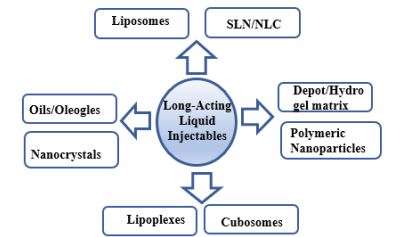
Figure 3: Lipid and polymeric assemblies for LAI formulations.
Depending upon the excipients, they can pack into different assemblies depending upon fatty acids’ chain lengths and compositions and also the headgroups. For instance, Sorbitan Monooleate (SMO) bearing a C18:1 fatty acid, can encapsulate leuprolide to yield extend release over a month, and in vivo data suggest that on subcutaneous injection of 90 ml formulation in dogs, it was as effective as PLGA microsphere depot [32]. Other ionic lipids whether cationic or anionic in nature also play a crucial role in complexing the drug molecules leading to sustained release from lipid-based formulations [33].
Manufacturing of LAIs
The manufacturing processes of long-acting lipid-based formulations have been established. Those processes include both top down and bottom approaches involving wet milling and low- and high-pressure aqueous and non-aqueous homogenization, emulsification and microemulsions, precipitation, solvent evaporation and mixing of lipid aggregates with controlled particle sizes. Figure 1 illustrates the processes used for long acting injectables [34].
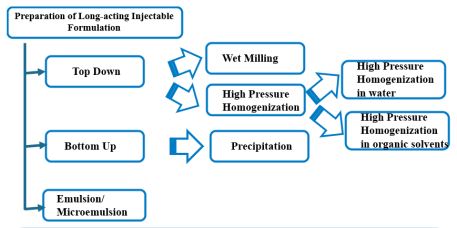
Figure 4: Processes for Preparation of long-acting injectable formulations.
In top-down approach, the high-pressure homogenization process requires the fracture of drug particles by cavitation, high shear force collision of particles against each other. The collision of the particles at high speed helps break the particles into smaller particles to achieve nanosizing. With increasing viscosity of media, it helps enhance the nano-sizing efficiency by increasing power density within the dispersion media. Multiple homogenization cycles (5-10 cycles) are often used to achieve the desired unimodal particle size distribution with a narrow polydispersity index. While, in high shear wet milling process it offers easy scalability, less variabilities from batch to batch, drugs either compatible to organic or aqueous milling to achieve drug concentrations as high as 400 mg/ml in formulations.
In bottom-up approach, organic solvents are used in preparation precipitation and mixing, and emulsion process. These solvents can control the emulsion droplets, which in turn control the particle size of nanosuspensions. In some cases, a hybrid process combining bottom up and top down is utilized to ensure better control of size distribution. While all these manufacturing processes are applicable to all aqueous and non-aqueous nanosuspensions, in oil and lipid-based processes, the bottomup approaches and/or high-pressure homogenization are well suited for manufacturing of small and large batches of long acting injectable formulations [34].
Characterization of long-acting injectable formulations
Long-acting injectable formulations are prepared by simple approaches, and their physio-chemical characterization is accomplished by techniques like polarized microscopy, DSC, x-ray diffraction, SEM, FT-IR and NMR. All these instrumentations are used for oil/lipid-based solutions/suspension as well as for other aqueous based long-acting suspensions [34]. Physical and chemical stability of drugs in oil and lipid phases are of prime concerns during and after preparations, and on storage conditions. Let’s take a closer look into physical characterization of these formulations.
Particle size by visual inspection is one of several criteria for injectable formulations, especially in liquid solutions. This identifies the particulates or aggregates in oil-based solutions. In more complex formulations like oleo gels and lipid-based drug products, light microscopy and other techniques are equally important to understand the physio-chemical properties of liquid formulations.
Polarized Light Microscopy (PLM) is commonly used to examine the microstructures of oleogels. Hot stage microscopy is also used to examine the packing and thermal and mesomorphic characteristics of oleogels. Other techniques like particle size analyzer, Scanning Electron Microscopy (SEM) and Transmission Electron Microscopy (TEM) are also used to examine morphology, microstructures, and particle size, and distinguish from liquid crystals. Co and Marangoni evaluated 2.5% of 12-Hydroxystearate (12-HSA) in canola oil and found that spherical aggregates were formed when cooled at 30o C [35]. Wang et al. examined Glyceride Monooleate (GMO) and phytantriol with and without N-Methyl Pyrrolidone (NMP) as a solvent and found that the presence of NMP results in formation of Lamellar phase (La) and presence of small amount of tricaprylin results in formation of Hexagonal phase (HII). Thus, PLM is useful to characterize the structures formed mesomorphic and lyotropic crystal formed on heating and cooling [35].
SEM and TEM can be used to characterize the oleogels comprised of 12-HAS formed from liquid crystal systems like cubosomes and hexosomes [32]. Oleogel and lipid based liquid crystalline nanoparticles have been characterized using cryo or freeze fractured SEM and TEM techniques to reveal their microstructures [36].
Wide and small angle x-ray scattering (WAXS and SAXS) have been used for characterization of packing configuration of liquid crystalline and oleogels. For instance, Tiberg et al. identified polymorphism by WAXS in oleogels comprised of stearic acid and stearic acid- stearic alcohol [37]. On the hand, SAXS was used to characterize the mesophases in liquid crystalline systems [38].
Conventional physical techniques such as DSC, NMR and FTIR have also been used for characterization of chain packing and melting, and intermolecular interactions, and reported elsewhere [10].
In addition to all these characteristics above, the mechanical characteristics such as viscoelasticity and rheological properties are important for developability of organogels and lipid based long-acting injectable drugs. In oleogels, the liquid component (loss modulus, G”) is considerably smaller than solid component (storage modulus, G’) [39]. At lower viscosity (ca. 0.6 Pas), the injectability of liquid crystalline system is plausible due to increasing shear thinning as a function of shear stress/shear rate.
In vitro release
Currently, there is no pharmacopeial method for in vitro drug release assessment of intramuscular injectable products. Since the oleogels are liquids prior to injection, in vitro dissolution can’t mimick the release when solidified post injection. Therefore, modification in test method is required to assess the in vitro release of drug. Several methods have been used for assessing the in vitro release of drugs.
1. Non-membrane Method- used for fatty acid based oleogels or poloxamer 407 solution which transform into gel at 37 oC bath, and drug release assessed over days or weeks
2. Dialysis Method- where the drug is comprised of liquid crystalline phase (cubosomes, hexoxomes) or oelogels are placed in dialysis tubing with certain MW cut off in a USP 2 bath, and the release profile is monitored with constant stirring by assaying the drug in buffer.
3. USP 1 Method – placed the formulation in a basket with or without mould and the release profile of drug is monitored in aqueous buffer
4. USP 2 Method – where the sample is placed in a mould at the bottom of Type 2 bath and release profile is assessed at 37o C under constant paddle speed at 50-100 rpm
5. USP 3 Method- where the sample is retained on a mesh with pore size of 177 microns and release profile of drug from semi-solid formulation is monitored in buffer solution.
For In Vitro In Vivo Correlation (IVIVC), the most studies of long-acting injectables are performed in rats by subcutaneous route with some exceptions like in monkey that requires an intramuscular administration [40,41]. These differences in route of administrations (SubQ vs IM) lead to lack of confidence in IV/IV correlation data [21]. In a study, Plourde et al. showed a clear difference in vitro vs in vivo release from an oil-based vs aqueous based suspension of drospirenone. Both formulations showed slower in vitro release, but in vivo release showed much lower plasma concentration from aq. suspension than oil-based formulation [27]. Take collectively, it can be suggested that there is always a some IVIVC but it predominantly depends on good in vitro release data and the method used.
Absorption of lipid based long-acting injectables
Drug absorption could lead to wide therapeutics with low dose and greater potency esp. via IM and it remains the main Pharmacokinetic (PK) and Pharmacodynamic (PD) requirement for a long-acting injectable formulation. Drug release and absorption occur in stepwise manner and the excipients in formulations control the release by two processes. For example, an oil based long-acting formulation controls the release via diffusion which in turns depends on concentration of drug in oil, diffusion coefficient of drug from matrices, partition coefficient of drug from depot to tissue fluid, surface area of oil depot and degradation rate of oil depot [19]. In some of the approved APIs are prodrugs in natural in oil (Table 1), undergo hydrolysis post IM or SC injection to yield active parent molecule via esterase and enter systemic circulation via lymphatic secondary depot [14]. Thus, there is lag time between injection and release of drug before absorption. In comparison with subcutaneous route, the absorption rate is slower, and lag time is relatively shorter. Diffusion coefficient of drug out of an oil depot depends on the partitioning coefficient between two phases and also depends on the viscosity of oil depot. Higher viscosity of an oil-based formulation can lead to pain at the injection site. Thus, managing the release kinetics from the complex depot matrices such as oleogel and liquid crystalline depots including cubosomes and hexosomes, become an important delivery strategy for developing robust formulations to meet the patient compliance [42]. Furthermore, surface area of the oil depot forms a spherical shape covering specific surface area in the muscle tissue. For instance, a 0.5 ml injection covers about 750 mm2 surface area in the tissue. An oil solution opposed to oil gels, can break into smaller droplets covering maximum surface area, and thereby, increasing drug release and absorption. In oil suspensions, the particle size plays an important role in releasing and controlling the drugs. For instance, the smaller the particle size, the faster is release and vice versa. In oil and lipid-based formulations, particle aggregation due to Ostwald ripening is possible as opposed to aqueous suspensions, and hence, the digestion rate and release rate are different in both cases.
Conclusion and future perspective
Oil and lipid based injectable drugs are limited, and more work is still needed to overcome the challenges to bring the innovative molecules to market. Thus, use of novel lipid based long-acting injectables such as oleogels and liquid-crystal systems is critical to bring the innovative oil solution-based products. Modified oleogel and liquid crystal-based solutions can be optimized for sol-gel transition to achieve the desired extended release for weeks or months. Higher viscosity, and injection pain at site and also syringe injectability all remain the impediment in developing the oil based long-acting formulations. In a typical oil based injectable solution where drug is dissolved in the oil and membrane filtered under reduced pressure to remove bioburden, and autoclaved by dry heat sterilization at 121o C for 15 min. If drugs sensitive are to temperature, the sterile process will be different, and most likely aseptic process is used from fill to finish to avoid any cross contamination or thermal degradation.
Ascendia offers a range of enabling technologies for long acting injectables, IM or SC or IV. NanoSol®, EmulSol® and Lipidsol® are commonly used for development of oil and lipid-based solutions, oil and aqueous or liquid suspensions, and nanocrystals for immediate and long-term release of small and large molecules across all modality. Ascendia’s expertise with GMP top down and bottom-up manufacturing for sterile and aseptic drugs, coupled with lyophilization offers a unique value proposition for drug manufacturers to help expedite the development of new molecules faster to clinic.
We always work towards offering the best to you. For any queries, please feel free to get in touch with us. Also you may post your valuable feedback after reading our journals, ebooks and after visiting our conferences.

