


| Received | : | Apr 08, 2026 |
| Accepted | : | May 01, 2026 |
| Published Online | : | May 08, 2026 |
| Journal | : | Journal of Nanomedicine |
| Publisher | : | MedDocs Publishers LLC |
| Online edition | : | http://meddocsonline.org |
Cite this article: Ali S, Huang J. Aseptic Spray Drying for Poorly Soluble Molecules. J Nanomed. 2026; 9(1): 1076.
Keywords: Spray drying; Aseptic spray drying; Amorphous solid dispersions (ASD); Polymers; Excipients; Solubilizers; Injectable drugs; Biologics; Inhalation spray dried powder.
Spray drying technology has been used extensively for converting highly crystalline and high melting molecules to Amorphous Solid Dispersions (ASD) to overcome the solubility and bioavailability challenges [1]. For others, spray drying has also been used to encapsulate drugs in biodegradable and biocompatible polymers for controlled release applications [2].
In the recent years, the spray drying has been used for more complex biopharmaceutical molecules for preserving the integrity, efficacy, and long-term stability of highly sensitive therapeutics including proteins, peptides, nucleic acids, and biologics [3]. Unlike conventional spray drying, an aseptic spray drying requires a stringent cleanliness measure to produce ASD powder free from cross-contaminants [4]. This is necessary to allow the aseptically produced powder to fill directly in containers like vials, prefilled syringe pouches, cartridges, and blister packaging to maintain its bug-free environment to overcome the terminal sterilization [5]. As a matter of fact, if terminal sterilization can be avoided at all cost due to undesired adversely affect and to maintain the integrity of vaccines and biologics, the aseptic sterility is highly sought to achieve the highest quality and stability of drug products [6].
In comparison with sterile freeze drying, aseptic spray drying technology is cost effective by saving time and expediting drug development process. Like freeze drying, spray drying also requires a secondary drying (desorption following sublimation) for removing the residual moisture or solvents in the powder in a closed environment by vacuum dryer [7]. First used in 2006 by Pfizer for Exubera® VR an insulin inhaled powder (withdrawn later in 2007) and then in 2009 for vaccine, the aseptic spray drying has been used for commercial manufacturing of poorly soluble molecules, small and large, and biopharmaceuticals [8]. In 2010, Verity Pharmaceutical introduced triptorelin pamoate (Trelsatar LA) as intramuscular microsphere suspension for prostate cancer [9]. Following the initial first few years the launch of a number of SD injectable drugs, many other drugs were launched as well including lanreotide acetate (Somatuline LA microspheres in 2013 by Ispen, RaplixaVR, a biologic for topical formulation in 2015 by ProFibrix BV and levodopa (Inbrija) in 2018 by Acorda Therapeutics [10].
Critical processing conditions for spray drying process
In a conventional spray drying process, the critical processing parameters for spray drying depend on spray rate, nozzle size, inlet and outlet temperature, humidity, drug and polymer amounts, atomization rate among others. As indicated, the following critical parameters are used for spray dried formulations [11].
1. Spray rate – faster rate helps improve the particle size and shape upon atomization
2. Nozzle size- spray rate through the nozzle aperture determines the shape and size of the speary dried powder, and is critical for product’s performance
3. Polymer and drug concentrations- higher solid content is important to cut down the solvents, that further improves faster evaporation and less exposure of drug in solvent for extended periods during spray drying, and to maintain droplet size upon atomization
4. Viscosity – lower viscosity over higher viscosity of feed is preferred as it requires low energy and pressure to yield desired spray patterns and particle sizes
5. Humidity - controlling humidity is necessary to reduce the adherence of the powders with the vessels, thereby, it improves the yields, and decreases the chances for agglomeration
6. Inlet temperature of air- higher inlet temperature leads to faster evaporation of solvents, and moisture, but it should be controlled to drugs sensitive to higher temperature to prevent degradation of drugs
7. Outlet temperature of air- controlling it by adjusting the gas flow which in turns atomizes the droplets out of nozzle and controls the particle size and moisture in spray dried (SD) powder
Effects of processing parameters on ASD
 Table 1
Table 1: resentati
+/- Minor influence (positive and negative)
++/-- moderate influence (positive and negative)
+++/--- High influence (positive and negative)
+/- may not change
Design of an aseptic spray drying system
For aseptic spray drying process, the spray chamber must be controlled by allowing access to (i) an ideal filter to provide continuous drying condition for atomizing nitrogen gas (ii) a nozzle atomizer to allow sterile liquid feed to minimize cross contamination during atomization and (iii) a cyclone for collecting spray dried powder and to separate gas by a chiller or condenser and/ or let free through exhaust. A small amount of moisture (ca. 2%- 10%) is typically trapped in spray dried powder. Thus, secondary drying is often required for the powder collected in cyclone to reduce the desired moisture level to prevent the nucleation of drug back to crystalline state. The spray dried powder from cyclone can be further collected in sterile vials under capped closure system, as shown in Figure 1.
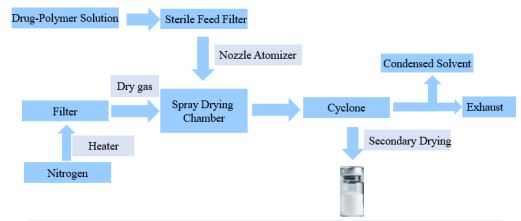
Figure 1: Illustration of aseptic spray drying process.
In the process, sterile air or nitrogen is used as dry gas to pro-tect against microbial contamination. The drying gas is filtered through HEPA filters and heated at inlet temperature of 100oC -180oC depending on the drug molecules, but lower in most case where vaccine or biologics are spray dried. Atomization is carried out at the top of spray dry chamber where the feed is introduced and maintained in sterile state. The atomized drop-lets are continuously dried as process continues. The atomiza-tion depends upon the atomizer and feed solution used, which is critical to control the particle size, shape and residence time of droplets in drying chamber. The outlet drying gas tempera-ture is typically around 40oC - 70oC. Thus, the parameters like drying inlet and outlet temperatures, atomization pressure and feed rate all must be optimized, as shown in Table 1 [12]. The evaporation rate is crucial for liquid droplet to yield fine pow-der characterized by particle size and morphology. Other fac-tors affecting the particle size of spray dried powder are shear and concentration of feed solution comprised of excipients/ polymers and drugs, gas flow rate, gas temperature, pump rate, aspirator rate, inertial forces which could impact the atomiza-tion angle. In a spray drying process, feed solution and drying gas introduced the drying chamber from the upper end and the spray drying powder is collected at the bottom using a cyclone separator followed by storage in closed container aseptic vials.
Role of excipients for spray drying
Selection of excipients for aseptic spray drying must be taken with considerable attention due in, part to, the drug products aimed at injectable and inhalation application and hence should be free from microbial and endotoxins as well as approved in drug products. Thus, the excipients with history of safety with controlled endotoxins and compatible with the APIs, are highly preferred to avoid any regulatory delays when submitted for approval by the agency.
The aseptic spry dried powder for injectable requires a range of excipients including sugars, amino acids, solubilizers/surfactants. Those disaccharide sugars like sucrose, mannitol and trehalose protect proteins from agglomeration in solution. Therefore, the concentration of sugars is critical for stability of dry powder by rendering intermolecular hydrogen bonding interactions with amino acids of proteins and hydroxyl groups of sugars. Table 2 lists the commonly used excipients for ASD and biologics [13].
Table 2
Table 2: List of excipients for spray drying.
The scope of the manuscript though is slightly different, but it takes a closer look into these excipients for spray drying. For example, polymers such as HPMCAS, HPMC, PVP, PVA, PVPVA, Soluplus® among others have been used extensively in approved oral ASD drugs. These excipients play a crucial role in stabilization of drugs in amorphous state and prevent recrystallization. Higher molecule weight with longer polymers stabilizes the drugs much better as opposed to short chain polymers due to stronger polymer-drug entanglement. For example, PVP K-12 versus K-30, the latter provides better stability and compatibility as compared to short chain K12 polymer [14]. Since PVPs are compatible to other excipients such as sugars and amino acid, they have been used in several marketed drugs including vaccines as stabilizing agents and enhancing the formulation [15]. Copovidone (PVPVA64) and HMPCAS, both possessing higher Tgs, have been used extensively due to their compatibilities with other excipients including solubilizers required to help maintain the supersaturation of drug during dissolution or maintain kinetic stability [16].
Proteins and amino acids are important choice of excipients for inhalation spray dried powder. Among the amino acids, glycine, leucine, arginine, histidine, are used in spray drying of stable protein powder. Leucine because of its low molecular weight, can help improve the surface-active properties of aerosol in pulmonary delivery system. In addition, proteins can help stabilize the APIs by preventing aggregation and reducing surface tension without denaturation. Bovine serum albumin, for example, is commonly used to prevent aggregation by enhancing protein-protein interactions and also to prevent enzymes from degradation during spray drying [17].
High melting lipids (>50oC) are preferably used in spray drying to avoid stickiness and improve stability of spray dried powder. Phospholipids like egg phospholipid and saturate soy lecithin, and long chain triglycerides are often used in spray drying of drugs for encapsulation and to improve stability by protecting them from degradation and overcome any stickiness during spray drying by building protective layer around the drug particles [18].
Polysaccharides and gums are used as stabilizers for a range of drugs and nutraceuticals. Gums, for example, used as emulsifying agents and film formers to protect light sensitive drugs, while polysaccharides like high molecular weight maltodextrins stabilizes the amorphous drugs and help protect drug from moisture due to their low hygroscopicity in nature. Polysaccharides such as chitosan, alginate, and carboxymethylcellulose also help control release due to their mucoadhesive properties.
Consideration for aseptic spray drying
Most spray dryers, operating under ISO 7 or ISO 8 cleanroom can produce the spray dried powder with low burden but can’t meet sterile requirements. Aseptic spray drying requires the guidelines from FDA for sterile product manufacturing facilities coupled with the know-how to maintain the facilities and equipment. Table 3 shows the airborne classification systems for clean areas to manufacture sterile pharmaceutical products in accordance with WHO guidelines.
Table 3
Table 3: Airborne particulate classification systems and microbial limit in sterile drug products [19].
An aseptic spray dryer must be designated in cleanroom equipped with sterile high efficiency particulate air/nitrogen (HEPA) filters and containment systems. FDA recommends that aseptic spray area must be adjacent to at least Grade C (ISO 7) with the understanding to monitor the microbial enumeration as frequently as possible by settle plates, volumetric air or sample swab test to ensure the risk of possible cross-contamination. The following requirements should meet for aseptic spray drying.
1. Spray dryer inside, Grade A
2. Powder handling and filling, Grade A
3. Environmental controls (Grade C or better)
There are multiple technical challenges to maintain and produce sterile spray dried powder. Those include: (i) sterilization of drying gas, air or nitrogen, often passed through 0.22 mm sterile filter pore size to remove microorganisms (ii) sterile atomization by 2-fluid nozzle or rotary disk (iii) closed powder collection in sterile containers under laminar flow or directly filled into vials, pouches, blisters during packaging in an aseptic isolator to avoid potential cross contamination.
Equipment, in general, must be compatible with in-situ sterilization processes, meaning compatible to repeated cleaning, for example, Clean In Place (CIP), and sterilization cycles by Steam In Place (SIP), dry heat, and vaporized hydrogen peroxide (VHP), and vaporized ethylene oxide (VEtO). SIP sterilization is currently used in practice that involves exposure to heat at 121-135oC at 2-3 bar for at least 20 min. To ensure complete sterility, the steam and high pressure generated during SIP procedure should be conveyed through feed line, atomization gas line, process gas line, nozzle, filters, and as well spray dry chamber and the entire piping. It also follows the surface washing with sterile water to help ensure the cleanness of the equipment for further use.
The physical properties of spray dried powder such as particle size, density, morphology should be controlled to ensure the product is not only sterile but also retains the biological activities. In addition, for biological samples the process parameter further optimized to ensure the products are stable, and process is robust for scale up as stress from heat and atomization during process can degrade the proteins and peptides, and other large molecules while in sterile state.
Conclusion and future perspective
As more challenging molecules are discovered, the industry is weighing all formulation technologies to improve their solubility and bioavailability, and to bring them to the clinic faster. With reference to poorly soluble and parenteral molecules, the aseptic spray drying has emerged at the forefront of the innovative drug candidates including vaccines and nanomedicine formulations. With options other than aseptic spray drying, other technologies like lipid and polymer nanoparticles, micelles, nanosuspensions, and lyophilization are all viable methods used for those injectable drug molecules. With the very aseptic spray drying first vaccine approved in 2010, the pharma industry is also extending the utilities for small and large molecules for injectable drugs. The complexity and maintenance of aseptic equipment, regulatory barriers and acceptance are all important factors when aiming for aseptic spray drying for custom or tailored made products with certain conditions in mind including (i) appropriate and compatible excipients/polymers approved in marketed drugs (ii) sterile filters for feed liquids compatible to 0.22 mm filter pore size, (iii) compatible HEPA filters resistant to heated gas/nitrogen (iv) compatible with CIP and SIP systems, and (v) short connecting tubes/pipes and smooth surface to avoid build ups during spray drying.
Ascendia offers enabling technologies for poorly soluble drugs, small and large molecules, proteins and peptides. Its Amorsol®, an amorphous solid dispersion technology with option to aseptic spray drying capabilities in the ISO cleanrooms can help the drug manufacturers for bringing in the lead candidates from early phase to clinical phases.
We always work towards offering the best to you. For any queries, please feel free to get in touch with us. Also you may post your valuable feedback after reading our journals, ebooks and after visiting our conferences.

