


| Received | : | Apr 02, 2026 |
| Accepted | : | Apr 22, 2026 |
| Published Online | : | Apr 29, 2026 |
| Journal | : | Journal of Gynecology Case Reports |
| Publisher | : | MedDocs Publishers LLC |
| Online edition | : | http://meddocsonline.org |
Cite this article: Kovács A, Mateoiu C, Colpaert C, Parris TZ, Bohlin KS, et al. Vulvar Adenocarcinoma of Mammary Gland Type: Thinking Outside the Box. Report of Two New Cases and Comprehensive Review of The Literature. J Gynecol Case Rep. 2026; 5(1): 1025.
Adenocarcinoma of mammary gland type of the vulva is rare, with fewer than 100 cases reported since its first descrip tion by Greene in 1936. Here, we present two additional cases.
The first case is a 68-year-old patient successfully treated with local excision of the vulvar neoplasm, followed by re-ex cision. She received adjuvant endocrine therapy with the aro matase inhibitor exemestane for five years. Subsequently, she underwent radiotherapy both locally to the vulva and region ally to both inguinal areas. No recurrence has been detected 12 years after the initial vulvar surgery.
The second additional case is a 65-year-old woman. Biopsy of enlarged inguinal lymph nodes demonstrated ER- and PR positive metastatic carcinoma with breast-like features. A para clitoral nodule was surgically excised. Its histological examina tion demonstrated invasive tumor consistent with breast-like carcinoma of no special type, with adjacent ER-positive anogenital mammary-like glands. Treatment with ribociclib and letrozole was started. Lung and lymph node metasta ses resolved, but bone marrow and liver metastases pro gressed. Treatment was changed to fulvestrant and weekly paclitaxel. The patient died more recently, 23 months after diagnosis.
In addition, we provide a comprehensive historical over view of vulvar adenocarcinomas of mammary gland type, including their immunohistochemical profiles, molecular analyses, and administered therapy. This overview not only sheds light on the development of histopathological diag nostic tools and the evolution of surgical and oncological treatment strategies over the past 90 years but may also as sist pathologists in accurately diagnosing this rare malignan cy and oncologists in choosing the appropriate treatment.
Keywords: Mammary-like vulvar adenocarcinoma; Anogeni tal mammary-like glands; Ectopic vulvar breast-like adenocarci noma; Vulvar adenocarcinoma of mammary gland type.
Abbreviations: AGMLG: Anogenital mammary-like glands; AR: Androgen receptor; DCIS: Ductal carcinoma in situ; ER: Es trogen receptor; H-E: Hematoxylin-eosin; HPV: Human Papil loma Virus; IHC: Immunohistochemistry; NGS: Next generation sequencing; NST: No special type; PR: Progesterone receptor; RTU: Ready to use; VAMGT: vulvar adenocarcinoma of mam mary gland type.
Mammary-like carcinoma in extramammary sites is very rare, occurring most frequently in the axillary region. Vulvar Ad enocarcinoma of Mammary Gland Type (VAMGT) is an unusual tumor arising from specialized anogenital mammary-like glands (AGMLGs), accounting for less than 10% of vulvar malignancies [1] and Table 1 [2-80]. The presence of ectopic breast tissue in the vulva was first described by Hartung in 1872, who postulat ed that ectopic mammary tissue can occur anywhere along the embryonic milk line between the axilla and the groin [81. Ecto pic mammary tissue in the vulva is reported in 2–6% of women [30]. Greene diagnosed and subsequently reported on the first case of vulvar adenocarcinoma in 1936, noting its morphologi cal resemblance to genuine breast adenocarcinomas [12].
However, more recent studies suggest that these glands de rive from normal eccrine-type glands and are a normal constitu ent of anogenital tissue [82]. AGMLGs may display character istics of eccrine, apocrine and mammary glands and can form lobules and acini similarly to breast tissue. They can be located in regions outside the caudal milk line, such as the interlabial sulcus (between the labia minora and majora), the perianal region and the paramedian zone of the perineum, resembling normal breast tissue [33,36,46,82,83]. Various lesions, both be nign and malignant, may arise from AGMLGs, analogous to the spectrum of tumors seen in orthotopic breast tissue [1,84].
Another hypothesis suggests that adenocarcinomas arising from AGMLGs may originate through malignant transformation of pluripotent cells in the anogenital region [29].
VAMGT is predominantly diagnosed in postmenopausal women and is more frequent in parous patients [1]. The first diagnostic step is to exclude primary breast carcinoma and its metastasis in the vulva, metastasis of adenocarcinoma of other origins than breast and a primary malignant vulvar skin append age tumor. The presence of Ductal Carcinoma in Situ (DCIS) supports the diagnosis of a primary vulvar neoplasm, as does the identification of AGMLGs in the vicinity of the tumor. How ever, the invasive component of this carcinoma may overgrow the preexisting AGMLGs or the carcinoma in situ component, complicating histopathological diagnosis. Immunohistochemi cal (IHC) markers that may aid in the diagnosis are the same as those used for primary breast carcinomas [74,85]. VAMGTs often metastasize to regional inguinal lymph nodes, whereas distant metastases are relatively uncommon [1]. Surgical management may range from local excision to radical vulvectomy, combined with the sentinel lymph node technique and/or (bi lateral) inguinofemoral lymphadenectomy. However, for tumors confined to more superficial layers of the skin, less aggressive approaches—such as Mohs micrographic surgery—may be con sidered, particularly in elderly patients [26]. Although VAMGTs were historically thought to be rare, with just over 40 cases re ported in the literature, we conducted a review indicating that the actual number is significantly higher. This tumor has been reported under a variety of nomenclatures, including: mam mary-like adenocarcinoma, primary breast cancer of the vulva, mammary-like ductal carcinoma of the vulva, vulvar adenocar cinoma of mammary gland type, adenocarcinoma arising in vul var breast tissue, adenocarcinoma arising in aberrant mammary gland in the vulvar area, “breast-like” adenocarcinoma of the vulva, infiltrating ductal carcinoma of the vulva, ectopic breast cancer of the vulva, carcinomas of anogenital mammary-like glands, apocrine adenocarcinoma of the vulva, primary ectopic breast carcinoma mimicking vulvar malignancy, and vulvar Pag et’s disease with underlying adenocarcinoma simulating breast carcinoma. In addition, we report two new cases of VAMGT. The aim of this publication is to raise awareness of the existence of this rare vulvar adenocarcinoma and to provide guidance to pathologists on the criteria that should be considered when di agnosing this tumor.
Case 1
In 2014, a 68-year-old patient presented with an ulcerative lesion of the vulva that had persisted for eight months. Eight years prior, she had undergone a hysterectomy with bilateral salpingo-oophorectomy for a well differentiated invasive endo metrioid adenocarcinoma confined to the inner half of the myo metrium (FIGO stage IA). The patient reported no family history of breast carcinoma or other gynecological malignancies. Mam mography excluded the presence of primary breast carcinoma. Surgical excision of the vulvar lesion was subsequently per formed. Gross examination of the vulvar specimen, measuring 25×15×10 mm, revealed an ulcerated tumor measuring 10 mm in diameter. Microscopic evaluation showed normal squamous epithelium with a central area of ulceration. The adjacent der mal tissue contained skin appendages, including hair follicles and eccrine and apocrine sweat glands, without evidence of epidermal pagetoid involvement. Deeper in the dermis and subcutaneous tissue, a tumor mass exhibiting a mixed glandular and solid architecture was identified as a grade 2 invasive adenocarcinoma with moderate nuclear atypia. A grade 3 DCIS component with comedo-type necrosis was present, support ing the primary nature of the tumor. No ectopic breast tissue was observed in the vicinity of the tumor (Figure 2). Due to pos itive surgical margins, a re-excision was performed to achieve complete tumor removal. Inguinal sentinel lymph node surgery was not performed. IHC analysis revealed an invasive adenocar cinoma with strong positivity for GATA3, estrogen receptor (ER, 100%), progesterone receptor (PR, 10%), androgen receptor (AR, 80%), Cytokeratin 7, and MUC1. The tumor was negative for HER2 by HercepTest (score 1+), WT-1, PLAP, inhibin, TTF-1, GCDFP-15, MUC2, TAG-72, CD10, CD56, chromogranin, synap tophysin, p16, p63, CK5/6, calretinin, CDX2 and CK20. The Ki-67 proliferation index was 33%, determined as a global score us ing AI analysis (Table 2; Figure 3). Correlation of the histological features with the IHC profile strongly supported a diagnosis of primary VAMGT, accompanied by grade 3 DCIS. Next-Genera tion Sequencing (NGS) analysis using the GMS560 gene panel identified pathogenic mutations in TP53 and PIK3CA, consis tent with molecular alterations commonly observed in breast carcinomas. In addition, a variant of uncertain significance was detected in the PCB1 gene. These findings provide important insights into the molecular profile of this rare tumor (Table 3). Adjuvant therapy included an aromatase inhibitor exemestane during a 5-year period. Radiotherapy was administered locally to the vulvar region (25 fractions of 2 Gy, total 50 Gy) and re gionally to both inguinal regions (30 fractions, total 60 Gy). No recurrence has been detected 12 years after the initial vulvar surgery.
Case 2
In February 2024, a 65-year-old woman presented with en larged left inguinal lymph nodes. Her medical history was unre markable, except for episodic immunosuppressive therapy for polymyalgia rheumatica. Biopsy of the lymph nodes revealed metastasis from breast carcinoma of No Special Type (NST), ER positive, PR positive, and HER2 negative (score 0). However, no primary breast tumor was identified clinically or radiologi cally. PET-CT showed diffuse bone marrow metastases in the ribs and spine, ground-glass opacities in the lungs, and a small hypermetabolic lesion in the vulva. A peripheral lung biopsy confirmed lymphangitis carcinomatosa. On clinical examina tion, a paraclitoral nodule was detected in the right interlabialfold, which was surgically excised. The vulvar excision specimen measured 28×18×20 mm and contained a well-circumscribed 12 mm white solid nodule located in the dermis and subcutane ous fat, without epidermal involvement. Histology showed inva sive carcinoma with features of grade 2 breast carcinoma (NST), including solid epithelial strands, moderate nuclear pleomor phism and rare mitoses. No in situ carcinoma was identified; however, ER-positive anogenital mammary-like glands were observed adjacent to the tumor (Figure 3.). Lymphovascular and perineural invasion were present. Resection margins were free of tumor. Immunohistochemistry demonstrated positiv ity for GATA3, ER (100% strong), PR (30% moderate) and HER2 (equivocal, score 2+). HER2 dual SISH showed no amplification. The Ki-67 proliferation index was very low (1%). Comprehensive genomic profiling using a 523-gene panel identified a subclonal pathogenic BRCA2 mutation with a low variant allele frequency (4%). No other pathogenic mutations were detected. Homolo gous recombination deficiency testing was negative. Tumor mu tational burden was low (4 mutations/Mb). Amplifications were detected in FGFR1 and CCND1. Microsatellite Status was Stable (MSS).
Therapy was initiated with ribociclib (CDK4/6 inhibitor) and letrozole (aromatase inhibitor). Fifteen months after diagnosis, lung and lymph node metastases had been resolved, but bone marrow metastases progressed, and liver metastases devel oped. Treatment was switched to fulvestrant and weekly pacli taxel. Patient died 23 months after diagnosis.
Comprehensive literature review
A literature review was conducted using PubMed and Clini calKeys®, starting with the keywords “mammary-like adeno carcinoma in the vulva,” “breast-like adenocarcinoma in the vulva,” and “vulvar adenocarcinoma.” References cited in ar ticles discussing VAMGT were manually examined to ensure that no cases were missed. All published cases identified in our online search, including their histological subtypes, immuno histochemical phenotype and molecular characteristics if avail able are summarized in Table 1. Our two new cases included, there are now 94 cases reported in literature between 1936 and 2026. The median age at diagnosis was 54.6 years (range 39–89). In three cases, the exact age was not reported, with patients described only as being in their sixties, forties and sev enties; for analysis, we estimated their ages as 65, 45 and 75 years, respectively.
 Table 1
Table 1: Review of the literature 1936-2025.
Table 2
Table 2: Antibodies, clones and dilutions used in this study.
Table 3
Table 3: Molecular characteristics for the present cases.
Table 4
Table 4: Summary of published cases of vulvar adenocarcinoma arising in AGMLGs with reported molecular analyses.
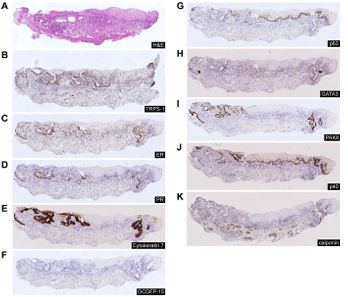
Figure 1: Normal AGMLGs of the vulva. Vulvar skin biopsy
2.8×0.6 mm. A 23-year-old female patient, clinically diagnosed as
endometriosis. (A) H-E staining. B-K: IHC staining; (B) TRPS-1+ (C)
ER+ D: PR+ (E) Cytokeratin 7+ (F) GCDFP-15 mucoapocrine marker
(G) p63 +/- (H) GATA3 (I) PAX8 J: p40 +/- (K) calponin.
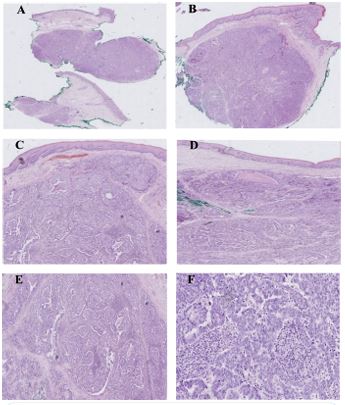
Figure 2: Case 1. Morphological features of VAMGT in H&E
staining. (A-B) Normal histological squamous epithelium with tu
moral mass deeper in the dermis. (C) Tumoral mass exhibiting a
mixed glandular and solid architectural pattern. (D-E) The solid ar
eas are arranged mainly in cribriform patterns. (F) The tumor cells
displayed moderate nuclear atypia.
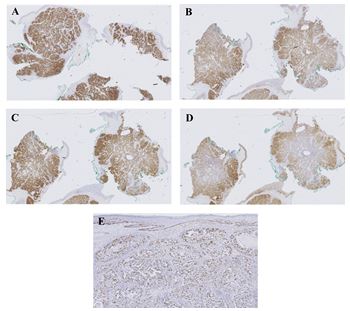
Figure 3: Case 1. Digital images of the positive immunohisto chemical findings of the VAMGT. (A) Cytokeratin 7 (B) GATA 3 (C) ER (D) AR E. Ki67 proliferation index: 33% as global score.
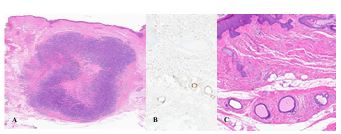
Figure 4: Case 2. (A) VAMGT. H&E staining. (B) ER IHC staining. (C) Normal AGMLGs in the vicinity of the tumor.
The presence of mammary tissue in the vulvar region is a well-recognized phenomenon in certain Cetacea, such as whales, porpoises, and dolphins, whose nipples are located on either side of the genital slit [86]. Early studies described vulvar adenocarcinomas as arising from supernumerary or ab errant mammary glands, vulvar breast tissue or ectopic mam mary tissue [12-15,23]. Denise Cho and Rose later referred to this tumor type as primary breast cancer of the vulva [4,22]. Even mammary-type DCIS has been reported [3,20,60,70]. Those invasive VAMGT that were not morphologically specified in these early studies can be interpreted as ductal-type (NST), [2,4,6,9,14,15,17,18,23,26,28-30,39-48,50,51,53-56,60,63,66, 69,73,75,76,80,82]. Later on, more specific subtyping of the VAMGT was introduced, such as the lobular type [8,13,19,34,65,67,71], the tubular type [31], the tubulo-lobular type [32], the mucinous type [5,25,37,61,64,72], the micropap illary type [33], the apocrine type [7,21,27,35,49], the meta plastic type [68], the myoepithelial type [52] and the encapsu lated / intracapsular type [78,79] of VAMGTs. A combination of different carcinoma-types was reported by Greene [12] Rose and Irvin [16,22], Graf [11], Kiyohara and Li S [36,62], and Tien AN Tran [70]. There have been cases described in which VAMGT was associated with extramammary Paget’s disease of the vul var skin (sometimes referred to as epidermal involvement or a pagetoid pattern) [7,8,16,21,24,27,33,36,41,44,46,49,53,60,68, 71]. VAMGT and extramammary Paget’s disease may represent a shared pathological continuum, as they exhibit a spectrum of changes analogous to those seen in the breast [60,69].
VAMGTs are listed in both the WHO Female Genital Tumours classification and the AJCC Cancer Staging System. These classi fications specify the specific glandular origin of vulvar adenocar cinomas, such as Bartholin gland, Skene gland, mammary-gland type or sweat gland origin [1,87-89]. From a pathological per spective, VAMGTs should be differentiated from adenocarcino mas arising in the Bartholin gland. The latter typically involves the anatomical region of the Bartholin gland and often demon strates a transition zone between benign Bartholin gland tissue and the tumor. Microscopically, they show variable differentia tion, sometimes with a papillary exophytic architecture involv ing the surface epithelium, but more commonly with predomi nantly glandular structures in deeply infiltrative areas. They may be of mucinous type; when present, the mucinous subtype can exhibit intestinal differentiation with goblet cells and large extracellular mucin pools. In contrast to VAMGTs (which can be positive for ER, PR, HER2, mammaglobin, GCDFP-15, and GATA3), adenocarcinomas of Bartholin gland origin are usu ally negative for ER, PR, and HER2, and typically show a CK7+, CK20+, CDX2+, and GATA3– immunophenotype (88). Notably, both tumor types are generally p16- and HPV-negative. Only rare HPV-associated cases have been reported in the literature; these cases display distinct morphology, typically resembling HPV-associated adenocarcinomas, characterized by mucin-poor tumor cells, hyperchromatic nuclei, numerous mitotic figures, and frequent apoptotic bodies. VAMGTs should also be distin guished from benign mammary-type tumors of the vulva, such as papillary hidradenoma, which may present with an ulcerated surface and clinically mimic malignancy. Histologically, papillary hidradenoma shows complex branching and interconnecting epithelial tubules and papillae lined by a subepithelial myoep ithelial cell layer positive for calponin and p63, in contrast to VAMGTs, in which myoepithelial cells are absent. Similarly to the breast, purely in situ carcinoma may also arise from Anogenital Mmammary-Like Glands (AGMLGs) [3,20]. Furthermore, tumor-like lesions of the vulva may mimic VAMGT, such as Bar tholin gland hyperplasia, which typically exhibits preserved aci nar–ductal architecture. Finally, metastatic adenocarcinoma to the vulva—particularly of colorectal origin—should be included in the differential diagnosis; clinical history and immunohisto chemical profile are essential for accurate distinction. To ensure that an adenocarcinoma is related to AGMLGs, several factors may assist in the differential diagnosis, such as (a) tumor local ization in the interlabial sulcus and (b) positive IHC expression of ER and PR [4]. However, the site of origin may no longer be identifiable in larger tumors that have grown far beyond the in terlabial sulcus. Moreover, there was a wide variety of primary mammary-like carcinomas that do not express ER or PR. Among the reported cases, several tumors were ER negative, [11,17,2 6,27,33,35,36,41,45,53,67,68,73], however not all cases were tested by IHC. Levin [18] first described a HER2-positive VAMGT, followed by subsequent reports [50,53,58,6,64,67,68,71,75]. However, not all cases reported in the literature were tested for HER2 status. Breast cancer molecular subtyping, using sur rogate categories such as luminal/non-luminal type, triple nega tive, HER2 positive subtypes etc., can also be applied to VAMGT [69]. Due to the lack of consistently available IHC biomarker data for the previously reported cases, we did not perform ret rospective subtyping or related statistical analyses [55]. An ec topic male breast cancer in the perineum had been described as a multifocal invasive breast-like carcinoma [56].
Given the rarity of these VAMGTs, optimal treatment strat egies are not yet established. However, oncological treatment and follow-up protocols generally mirror those used for ortho topic primary breast carcinomas, including wide local excision, sentinel lymph node biopsy and/or inguinofemoral lymphad enectomy, adjuvant systemic therapy and locoregional radio therapy. Similar to breast carcinomas, prognosis varies depend ing on stage and histological subtype. Two reported cases of VAMGT have been treated with neoadjuvant therapy [43,67]. North et al. reported a poorly differentiated tumor (ER+/PR+/ HER2-, T1N1M0) treated with four cycles of 5-FU/epirubicin/ cyclophosphamide followed by 13 weeks of docetaxel, resulting in a partial response in the left inguinal lymph nodes and com plete clearance at the primary site [31]. Niakan described a non luminal, HER2-positive invasive lobular carcinoma of pleomor phic type treated with neoadjuvant trastuzumab, pertuzumab, carboplatin, and docetaxel, achieving a complete pathological response upon surgical excision [67]. Despite the absence of standardized diagnostic and treatment guidelines, an accurate histopathological diagnosis remains crucial, ideally made in consultation with pathologists subspecialized in breast pathol ogy. Differential diagnosis includes adenocarcinomas arising from skin appendages and metastatic breast carcinomas [90]. Diagnosis is further complicated given that some malignancies with identical morphological features can originate primarily in both the breast and skin appendages (e.g., adenoid cystic carcinoma, apocrine adenocarcinoma). Tumor involvement of the epidermis, presenting as extramammary Paget’s disease, may also be observed in vulvar adenocarcinomas. Moreover, a wide variety of rarer breast carcinoma subtypes can develop in the vulvar region, including primary apocrine carcinoma, muci nous adenocarcinoma, neuroendocrine carcinoma and adenoid cystic carcinoma. These tumors may originate not only from AGMLGs but also from sweat glands, giving rise to malignant breast-like lesions. Despite compiling all cases reported in the medical literature over the past nine decades, it is not possible to microscopically re-evaluate these historical cases to deter mine whether they truly meet the current criteria for VAMGT. It is possible that some tumors originated from skin append ages when their features overlapped completely with those of breast carcinoma subtypes, such as invasive apocrine carcino mas [49]. Pelosi [20] reported a case in which apocrine DCIS of mammary type arose within a papillary hidradenoma of the vul va. In cases where differential diagnosis requires IHC—such as triple-negative adenocarcinomas—antibodies commonly used to identify primary breast carcinomas (cytokeratin 7, GATA3, mammaglobin, TRPS1) can also be applied to vulvar adenocar cinomas [74]. However, these markers are not entirely specific for breast lesions and may also stain adenocarcinomas originat ing from skin appendages [85]. Relatively few cases have under gone genomic characterization, although integrative genomic analyses could aid in selecting more targeted therapies [58]. Some patients with VAMGT have been found to carry BRCA1 or BRCA2 mutations (Table 4) [37,55,58,62,63,75,77]. In conclu sion, VAMGTs are rare tumors that intersect two areas of cancer management. Consequently, their histopathological evaluation and treatment require a multidisciplinary approach, involving both pathologists and oncologists with subspecialty expertise in breast carcinoma, to ensure that patients receive appropriate, targeted therapy.
Ethics approval
Case 1
This study was approved by the Ethical Committee of the Department of Medicine, Linköping, Sweden (Ethics code: Di ary Number 2020-00955). According to our university policy, in formed consent was not required, as the study does not include any identifiable patient information.
Case 2
Written informed consent was obtained from the patient prior to her death, which occurred shortly before submission of the manuscript for publication. Publication of the case report was approved by the Ethical Committee of AZ Turnhout, Bel gium, on January 29, 2026.
Acknowledgments
The authors thank biologists Niklas Dahr and Josefin Anders son for their technical support.
Author contributions
AK: Conceptualization; Literature review; Data curation; Writing – original draft; Visualization; Table preparation; His tological image acquisition to Case 1. SS: Writing – review & editing (Discussion section, differential diagnosis of vulvar le sions). CC: Writing – original draft (Case 2). Histological image acquisition to Case 2. All other co-authors: Writing – review & editing; Critical revision of the manuscript for important intel lectual content.
This study was funded by the Stiftelsen Assar Gabrielssons Fond, Sweden, Grant ID: F24-126.
Data availability
Not applicable. This manuscript does not report data genera tion or analysis.
Disclosure
The authors state they have no competing interests.
We always work towards offering the best to you. For any queries, please feel free to get in touch with us. Also you may post your valuable feedback after reading our journals, ebooks and after visiting our conferences.

