


| Received | : | Sep 10, 2026 |
| Accepted | : | Sep 22, 2026 |
| Published Online | : | Online: Sep 29 2026 |
| Journal | : | Journal of Clinical Images |
| Publisher | : | MedDocs Publishers LLC |
| Online edition | : | http://meddocsonline.org |
Cite this article: Lobreglio G, Lobreglio D. Hereditary Haemorrhagic Telangiectasia. J Clin Images. 2026; 9(2): 1173.
A 52-year-old woman presented with fatigue and iron deficiency anemia (hemoglobin 8,1 g/dl, mean corpuscular volume 61 μm3, iron 13 μg/dl, ferritin 2 ng/ml) due to recur rent spontaneous epistaxis and a recent episode of gastro intestinal bleeding. Physical examination revealed multiple mucocutaneous telangiectasias most evident on the tongue (Panel A), buccal mucosa, chest and fingers (Panel B); a CT scan of the chest and abdomen revealed multiple arteriove nous malformations in the liver. The patient’s mother and the brother had similar clinical manifestations. Based on the clinical picture and the family history, Hereditary Haem orragic Telangiectasia (HHT) was diagnosed according to Curaçao international diagnostic criteria [1,2]. A molecular genetic test revealed a missense mutation in the gene en coding activin receptor-like kinase ALK-1 in the patient and the family, confirming the diagnosis of HHT (Osler-Weber Rendu syndrome). The patient was treated with laser pho tocoagulation of nasal teleangiectasias and iron infusions, with relevant improvement of the symptoms.
Although HHT is best managed in specialist centres with a multidisciplinary approach, it requires local coordinate care for the timely treatment of life-threatening clinical manifestations.
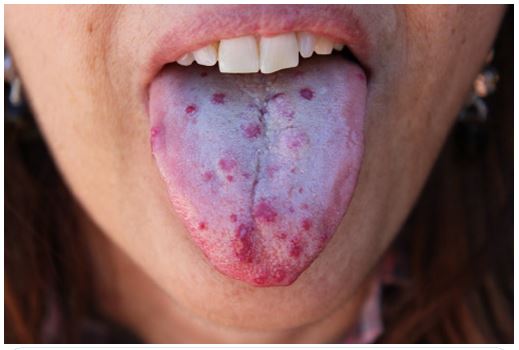
Figure 1:
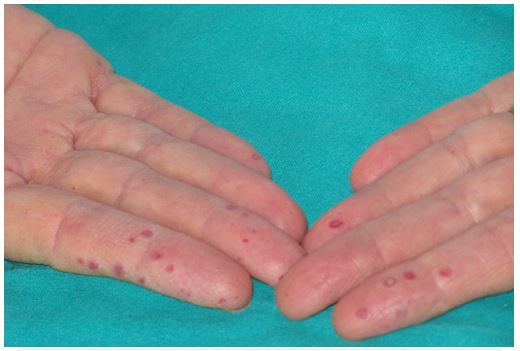
Figure 2:
We always work towards offering the best to you. For any queries, please feel free to get in touch with us. Also you may post your valuable feedback after reading our journals, ebooks and after visiting our conferences.

