


| Received | : | Nov 07, 2025 |
| Accepted | : | Nov 21, 2025 |
| Published Online | : | Nov 28, 2025 |
| Journal | : | Annals of Pediatrics |
| Publisher | : | MedDocs Publishers LLC |
| Online edition | : | http://meddocsonline.org |
Cite this article: Parkash A, Haleem A, Sughandi S, Akram M, Qureshi A. Unraveling the Mystery: Chronic Transaminitis and Diagnostic Dilemma Between Chronic Liver Diseases and Muscular Dystrophies. (Case Series from Tertiary Care Center of Pakistan). Ann Pediatr. 2025; 8(2): 1162.
The transaminitis is elevated level of alanine transaminase and aspartate transaminase in blood. They have been part of the routine investigation in any illness presently. These enzymes primarily signal the hepatic inflammation but can be released into the bloodstream from Muscle, Heart, Pancreas, kidneys and Hemolytic disorders.
We report five male cases referred from different centers of Pakistan with chronic transaminitis for more than 6 months. The diagnostic investigations for acute and chronic viral hepatitis, Wilson disease, Alpha 1 Anti-trypsin deficiency and Autoimmune hepatitis were unrevealing. Most of cases were referred for liver biopsy to reveal the diagnosis. While one had received the treatment of seronegative Autoimmune Hepatitis (AIH) with biopsy findings consistent with mild portal and periportal fibrosis, later the patient developed the calf hypertrophy after 4 years and diagnosed for muscular dystrophy with strikingly high Creatine Kinase (CK) level. Second case presented with arthralgia and transaminitis, third case presented with motor developmental delay and transaminitis, while the other two cases referred for liver biopsy with isolated elevated transaminase levels. Two out of our five patients had Calf hypertrophy and three cases had normal musculoskeletal and motor examination while none had stigmata of Chronic Liver Disease (CLD).
The CK levels were sent as possibility of muscular dystrophies and Glycogen storage disorders should be considered at first with isolated transaminitis. The levels were extremely high in all cases. Diagnosis was confirmed with Dystrophin gene mutation and cases were referred to Pediatric Neurologist. CK has 100% specificity to unravel the diagnosis of skeletal or cardiac Muscle straining secondary to myositis, Muscular dystrophies or Glycogen storage disorders respectively. This case series underscores importance of CK levels and extrahepatic source of transaminase release in blood which need to be excluded before encompassing the diagnosis of Seronegative Autoimmune hepatitis.
Keywords: Chronic transaminitis; Muscular dystrophy; Dystrophin gene mutation; Seronegative Hepatitis.
Aminotransferase are group of enzymes that transport Amine group from amino acid to alpha keto acid and generate fuel for TCA cycle. Hepatocyte has high cytosolic concentration of ALT while AST has 2 two isoenzymes found in cytosol(c-AST) and mitochondria(m-AST) [1].
Gentile et, al. in 2013 reported a case of chronic transaminase elevation in 40-year-old female for 9 years of age, later diagnosed with pulmonary embolism secondary to complication of pompe disease. She also remained underdiagnosed with extended workup done for Wilson disease, Autoimmune hepatitis and 2 times liver biopsies were done to reveal the pathology. She was diagnosed with recent history of dyspnea and muscular weakness with CK level of 732 (52-336 u/l) [2]. Traditionally the transaminases are considered marker of liver injury but can be elevated in cardiac and skeletal muscle involvement.
The cases of cryptogenic hepatitis are reported in literature when all causes of transaminemia are excluded and liver biopsy is suggestive of occult liver injury. Vincent Gacad in 2011 reported a case of seronegative autoimmune hepatitis in 76 years old female patient with stigmata of CLD, she had negative autoimmune panel but liver biopsy findings were consistent with autoimmune hepatitis [3]. This series reflects atypical diversity of transaminitis in Pediatric cases and these are rarely reported.
We report five cases in this article, referred for the evaluation of Chronic Liver Disease (CLD) with chronic asymptomatic transaminitis, no stigmata of CLD and Normal liver cholestatic and synthetic function tests. The diagnosis of chronic liver disease was established at outside centers due to elevated transaminase levels for more than 6 months. The patients had undergone for initial CLD workup which was negative for Wilson disease, Autoimmune hepatitis, Acute and chronic Viral Hepatitis, alpha one antitrypsin deficiency with normal Serum Ceruloplasmin levels, 24 Hour urinary copper level and No KayserFleischer ring, negative autoimmune hepatitis antibodies panel, hepatitis A and E IgM, hepatitis b surface antigen, Anti-HCV antibodies and A-1 AT levels respectively.
The clinical and biochemical details of cases are summarized in table no. 02 and description of cases is illustrated below.
Case 01. A
07 years old male child visited hospital first time at 2 years of age for acute febrile illness. He was treated with antibiotics and elevated transaminase levels first became evident during illness and remained elevated in follow up with negative hepatitis A and hepatitis E IgM. He was investigated for CLD. As the reports were inconclusive, He underwent liver biopsy and findings were consistent with batts and Ludwig grade II Mild portal and periportal fibrosis. Although he had no stigmata of CLD or any systemic involvement, the extended workup was done for chronic transaminitis.
The treatment was started with oral prednisolone and azathioprine. The patient was followed with no fall in Transaminase levels till 7 years of age (mentioned in table 01). At this age, He developed calf hypertrophy (shown in figure 01) with poorly elicited knee reflexes while never had Difficulty in walking, climbing stairs, combing, gait disturbance and Gower sign was also absent. This diverted the diagnosis towards muscular dystrophies. The CPK level was sent that reported 18964 u/l. The genetic testing for dystrophin gene came out to be positive for dystrophin Duplication at exon sites 12-18.
The average age of onset Duchenne muscular dystrophy is 3 years, at which our patient’s disease manifestation started with increased alanine and aspartate transaminases from muscles, however remained undiagnosed due to underscored consideration of extrahepatic causes of high transaminase level. The patient had benefit of autoimmune hepatitis treatment as prednisolone delayed the progression of muscle dystrophy by stabilizing the muscle membrane electrical activity, increasing myogenesis, inhibiting apoptosis and modulating proteolysis.
 Table 1
Table 1: Case 01. Alanine transaminase levels
Case 02. B
Nine years old male child had history of Arthralgia for 8 months, the workup for CLD was negative except single positive ANA with fine cytoplasmic speckled method and transaminitis. Clinically he was active alert child with no stigmata of Chronic liver diseases, normal musculoskeletal and motor examination. CPK level reported 9376 u/l, Echocardiography was normal and genetic testing was positive for deletion of Exon 13 of dystrophin gene. The liver biopsy was deferred and patient referred to pediatric neurologist.
Case 03. C
He was 3 years old male child referred for evaluation for elevated transaminase levels. The patient clinical details were suggestive of motor developmental delay. We lead the way to look for extrahepatic causes as child has no clinical evidence of liver involvement and no work up for CLD sent. The CK level was reported 34992 u/l. Genetic testing reported positive for deletion of dystrophin gene at exon 46-53.
Case 04 & 5 D & E
These 2 cases presented at similar age of 4 years with chronic transaminitis. They were referred for liver biopsy with suspected diagnosis of cryptogenic hepatitis after all initial workup negative for CLD. Both patients had no muscular weakness but one had calf hypertrophy (Fig: 02) with normal examination. CK levels reported 18775 u/l and 9000 u/l. Genetic testing revealed dystrophin gene deletion at exons 46-51 and exon 51 respectively.
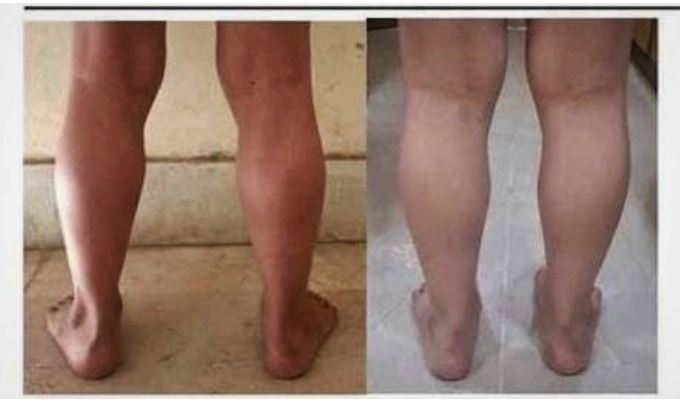
Figure 1 & 2: Calf hypertrophy of case A and D.
Duchenne Muscular Dystrophy is most severe disease among spectrum of dystrophinopathies, transmitted by X-Linked Inheritance pattern, that affects 1 in 3500 children [4].
The dystrophin is largest gene of human genome located on Xp21.2, more than 2.6 million base pair are present and 79 exons are identified [5]. At Exon 2-20 and 44-53 the dystrophin mutation is detected by Deletion, duplication and point mutation in 65%, 10% and 25% cases respectively. The average age of presentation is 3-4 years with tendency to fall, change in gait, difficulty in walking, climbing, combing or muscle pain cases are also reported in literature. However, Becker Muscular Dystrophy (BMD) is less severe form, clinical manifestations are encountered late due to partial functional dystrophin gene, clinical symptoms are evident often after 7 years or in late adolescence while cases of Dystrophin associated Cardiomyopathy (DCM) are clinically diagnosed in 3rd and 4th decade of life. DMD, BMD and DCM are XL-R disorders due to primary defect of dystrophin gene.
This gene stabilizes the sarcolemma and protects the muscle from degrading enzymes, due to mutation of this gene the muscle membrane gets fragile and with muscle contraction the injury to cells cause release of Creatine Phosphokinase (CPK-3 / CK-MM), aldolase, lactate dehydrogenase, transaminase and glutathione peroxidase, due to absence of Dystrophin Associated Protein complex (DAPT) [3]. CPK is highly specific marker of muscle injury while other enzymes aldolase, alanine transaminase, aspartate transaminase and lactate dehydrogenase can also be elevated in other conditions. A study from Pakistan by Hashim et, al. in 2011 reported, DMD cases have the sensitivity and negative predictive value of CPK of 100%, and specificity and positive predictive of 91% and 88.8% respectively and diagnostic efficiency of 94.1% [6].
The manifestation of dystrophin gene mutation starts with asymptomatic muscle injury and elevation of enzymes in blood by 2 years of age and later with loss of ambulation levels may decline due to fatty infiltration of muscle tissue.
Our cases had no family history of disease but elevation of muscle enzymes was the good indicator to diagnose and preserve the ambulation with early start of medical management. Furthermore, this case series also reflects the iatrogenic response of prednisolone in Muscular Dystrophies and delay in disease progression, as observed in first case. The holistic approach is necessary for timely diagnosis of etiologies of transaminitis.
Table 2
Table 2: The summarized clinical and biochemical details.
Conflicts of interest
The authors declare no conflict of interest.
Funding statement
The author did not receive any funding to conduct this case report.
Data availability statement
Data supporting the findings of this case report are available from the corresponding author upon reasonable request.
Ethics statement
Approval from Ethical committee of institute was taken.
We always work towards offering the best to you. For any queries, please feel free to get in touch with us. Also you may post your valuable feedback after reading our journals, ebooks and after visiting our conferences.

