


| Received | : | Nov 27 2025 |
| Accepted | : | Dec 06, 2025 |
| Published Online | : | Jan 13, 2026 |
| Journal | : | Annals of Pediatrics |
| Publisher | : | MedDocs Publishers LLC |
| Online edition | : | http://meddocsonline.org |
Cite this article: Haleem A, Munir A, Kamran A, Majeed UB. Beyond Crushing’s: A Fatal Case of Precocious Puberty- Metastatic Adrenocortical Carcinoma in a Child. Ann Pediatr. 2026; 9(1): 1164.
Precocious puberty is the appearance of pubertal signs before the age of 8 years in females and 9 years in males. It is due of over production of sex steroidal hormones can be Central in origin which is Gonadotropin Dependent Precocious Puberty (GDPP) due to activation of HPG (hypothalamus -pituitary - gonadal axis) that results in elevated levels of GnRH, LH,FSH , testosterone (in males) & estradiol (in females) or can be Peripheral in origin which is Gonadotropin Independent Precocious Puberty (GIDPP), source of production is adrenal gland, gonadal neoplasm or any ectopic tumor, in this type GnRH, LH,FSH levels are in prepubertal range due to negative feedback.
We report case of a 10 years old male child, considered an adult male at the pediatrics hospital door if not regarded with age number. His pubertal signs appeared from 3 years of age with increase in penile length followed by pubarche, adrenarche and cushingoid features. His lab values showed pancytopenia, AKI, hepatic failure, low LH, FSH & ACTH, high testosterone & cortisol levels. Imaging revealed left adrenal mass with hepatic and pulmonary metastasis. The manifestations of patient were consistent with diagnosis of peripheral precocious puberty 2⁰ to metastatic adrenocortical tumor.
Keywords: GIDPP; Adrenocortical tumors (ACTs); Metastasis.
Precocious Puberty (PP) refers to the early onset of secondary sexual characteristics before the age of 8 in females and 9 in males. It can be categorized into two types: central PP or GDPP which involves early activation of the hypothalamic-pituitarygonadal axis, and Peripheral PP (PPP) or GIDPP which is independent of gonadotropin release and axis development. Peripheral PP results from excessive sex hormone secretion from the gonads or adrenal glands. Diagnosis of PP in children is challenging and malignant conditions are rare, they are often not considered initially in the evaluation [1].
Distinguishing between CPP and PPP in males is generally straightforward, based on clinical and hormonal findings. In CPP, boys exhibit testicular enlargement and elevated gonadotropin levels, while in PPP, gonadotropin levels are suppressed. Identifying the cause of PPP can be more complex, as it can result from neoplasms such as Leydig cell tumors, hCG-producing germ cell tumors, and androgen-secreting Adrenocortical Tumors (ACT) [2].
The tumors described are suspected initially on clinical ground with examination findings. Testicular tumors will have enlarged testes with no cushingoid manifestations. Although ACTs are rare in children, can either be benign or malignant, with an annual incidence of about 0.2–0.3 new cases per million children [3]. Unlike in adults, where ACTs are typically nonfunctional, pediatric ACTs are usually functional, secreting cortisol and androgens, causing Cushing syndrome and precocious puberty [2]. Imaging alone cannot reliably distinguish between benign and malignant tumors, confirmation needs and biopsy. Genetic testing for TP53 mutations may be important sometimes, as ACTs in children may be associated with Li-Fraumeni syndrome, if family history is significantly present for Sarcoma, Breast, adrenal tumors, lymphoma or leukemia [2]. Here we report a case of 10 -year-old boy who presented to us with PPP due to Adrenocortical tumor.
We report a case of 10 years old male child [weight= 50kg, Height= 144 cm > 75th centile], presented with complain of increase in penile length from 3 years of age, increase in body hair, Mustaches, beard, Increased height compared to peers and increase in body odour for last 2 years. He also had history of significant weight gain, increased appetite, and eating frequent meals (1.5x of total required calories) and developed edema for last 1 year that started from feet gradually became generalized and was associated with headache, abdominal distension and abdominal pain.
Apart from these symptoms, he had never history of vomiting, blurred vision, constipation, vertigo, dizziness, recurrent loose stools, behavioral changes or any altered state of mind.
He was born of consanguineous parents with 6 other healthy siblings and Family history was unremarkable for precocious puberty or any malignancy in any gender.
He had mustaches, beard, cushingoid features, buffalo hump, Abdominal striae (Figure1a &1b), obesity more central, he was acidotic, oliguric, hypertensive [BP 140/90 > 95+12 centile], icteric, anemic, edematous, with Tanner stage P5P5T2, Bilateral testes were palpable of 4cm size. On systemic examination there was hepatomegaly and shifting dullness was positive, other systems were intact.
His labs are summarized in table 01 and 02. That shows Pancytopenia, Aki, Hypokalemia, hypocalcemia, deranged LFts. Imaging revealed left adrenal mass with altered echotexture of liver and multiple hypoechoic areas, which were confirmed on CT imaging are possibly metastatic lesions involving lungs also (Figure 2b,2c) and x-ray wrist revealed advanced bone age of 14 years > Chronological age of 10 years (Figure 2a)
Extended hormonal investigations revealed low FSH, Low LH, low ACTH, High testosterone and cortisol levels as summarized in table 02. These reports with onset of pubertal signs were concordant with peripheral precocious puberty 2⁰ to Adrenal tumor that was slow growing from 3 years of age, presented with metastasis in liver and lungs. Furthermore, Low Hypothalamus - pituitary axis hormones were also 2⁰ to negative feedback by high cortisol and high testosterone secreted by adrenal tumor.
Prepubertal testicular size excluded Testicular carcinoma and congenital adrenal hyperplasia was ruled out clinically with evidence of metastasis clinically. Unfortunately, Patient kept on palliative therapy due to extended multiple systemic involvement, Family counselled by oncology team that cure is not possible with any treatment modality due to dissemination. Regrettably, Patient’s condition worsened within 48 hours of hospitalization, he became anuric, developed severe respiratory compromise and expired. He did not give time to proceed for biopsy to look for histopathology and discuss further possible treatment modalities.
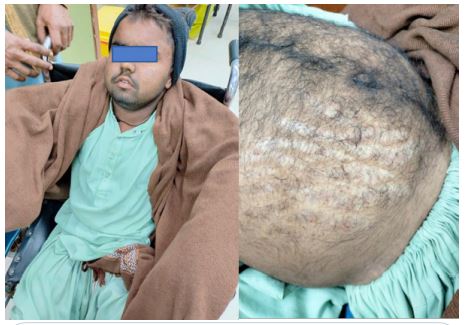
Figure 1: (a) Obese Male Child with secondary sexual characters (beard, mustaches) and Chubby Cheeks.
(1b) Abdominal distension with striae and androgenic hair pattern
on abdomen.
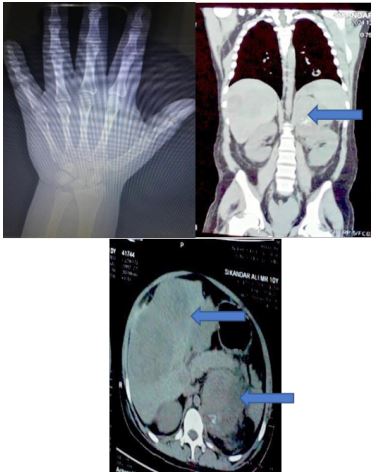
Figure 2: (a) All carpals and pisiform are ossified, growth plates
of phalanges are fused, growth plates of distal radius and ulna are
visualized. Bone age at 14 years > Chronological Age (10 years).
(2b) Left Adrenal (supra renal) Mass.
(2c) Left Adrenal mass and liver Mets.
 Table 1
Table 1: Hematology & Biochemistry Reports.
Table 2
Table 2: Endocrine Work Up Reports.
Adrenocortical Tumors (ACTs) are extremely uncommon in children, comprising only about 0.2% of all pediatric tumors and approximately 6% of adrenal tumors [5]. Nearly 65% of these cases manifest in children younger than five years [3]. In our patient, clinical and biochemical evaluations pointed to excess cortisol production, androgen secretion and 17-hydroxyprogesterone (17[OH]P) raising suspicion for Adrenocortical Carcinoma (ACC). The involvement of multiple steroidogenic pathways, as seen in this case, strongly suggests ACC.
Our patient also demonstrated significantly elevated cortisol and testosterone levels, with low Follicle-Stimulating Hormone (FSH), Luteinizing Hormone (LH), and Adrenocorticotropic Hormone (ACTH). Imaging revealed a left adrenal mass, altered liver echotexture, and multiple hypoechoic areas, which were later confirmed on CT to be metastatic lesions. Additional pulmonary involvement further reinforced the likelihood of an aggressive malignancy. Although adrenocortical adenomas can have similar imaging findings, the extent of metastatic spread in this case strongly suggested ACC.
For localized ACC, surgical resection remains the gold standard for curative treatment, with complete tumor removal offering the best prognosis. However, in this case, the extensive metastatic spread rendered curative treatment impossible. Advanced-stage ACC is associated with a poor prognosis, with survival rates as low as 10%. Chemotherapy is recommended for metastatic or recurrent disease. Further research and collaboration are required to develop standardized therapeutic protocols [1].
Given the rarity and complexity of pediatric ACTs, a multidisciplinary approach is essential. Effective management requires coordination among radiologists, surgeons, oncologists, endocrinologists, pathologists, and geneticists to ensure comprehensive care. Early diagnosis, genetic assessment, and individualized treatment strategies remain critical in improving outcomes for children with ACTs. Future research should focus on refining treatment modalities and identifying novel therapeutic targets to enhance survival rates in this challenging malignancy.
Adrenocortical Carcinoma (ACC) should be considered in pediatric patients presenting with any of pubertal sign in-concordant with normal pubertal signs onset that is testicular enlargement, pubarche, adrenarche followed by increase in penile length (at last).
A definitive diagnosis requires a combination of hormonal assessments, imaging studies, biopsy and genetic testing if required. Surgical resection could have been done in this patient if had presented before metastatic evidence as it remains the cornerstone of treatment and offers the best chance for cure in localized disease.
A multidisciplinary approach involving endocrinologists, oncologists, geneticists, and surgeons is essential for optimizing patient outcomes.
Key Message: Family remained unaware that isolated increase in penile length could be due cancerous condition, it was slow growing tumor that took 7 years to get metastasized in other organs. Family came very late for medical treatment; prognosis could not be made in favor of patient’s life. Awareness of such medical disorders need to be addressed in Population so early detection can save the life of children.
Acknowledgments: N/A
Ethics Statement: Ethical approval does not imply to case reports from institutional IRB.
Consent: Written informed consent was obtained from the parent to publish this report in accordance with the journal’s patient consent policy.
Conflicts of Interest: The authors declare no conflicts of interest.
Funding statement: No funding received.
Data Availability Statement: Data supporting the findings of this case report are available from the corresponding author upon reasonable request.
We always work towards offering the best to you. For any queries, please feel free to get in touch with us. Also you may post your valuable feedback after reading our journals, ebooks and after visiting our conferences.

