


| Received | : | Oct 17, 2025 |
| Accepted | : | Nov 04, 2025 |
| Published Online | : | Nov 11, 2025 |
| Journal | : | Annals of Otolaryngology Research |
| Publisher | : | MedDocs Publishers LLC |
| Online edition | : | http://meddocsonline.org |
Cite this article: Goldenberg G, Elsaygh J. A Novel Nutraceutical Approach to Postnasal Drip. Tryptophan is in the Loop. Ann Otolaryngol Res. 2025; 2(2): 1003.
Objective: To evaluate the effect of a nutraceutical, amino acid Tryptophan (Trp) on Postnasal Drip (PND) in a cohort of patients in a prospective interventional study. Use of Trp is a novel, alternative approach to the treatment of PND.
Participants and methods: Nineteen patients (8 males and 11 females), aged 36 - 90 years (71.1, SD 16.6) suffering from PND, were included in a prospective interventional study. The patients were treated with supplemental Trp for 1-4 years (1.7, SD 0.9) in a dose of 1000 mg 2 times a day. Trp was used as monotherapy in patients who failed and stopped taking antihistamines, anticholinergics, topical and systemic steroids. Saline sprays and decongestants were allowed. The patients were evaluated every 2-3 months, the results of the treatment with Trp were rated by the patients and caregivers during and at the end of the study period on the Clinical Global Impression of Change (CGI-C) scale.
Results: All participants tolerated Trp well. Ratings of the outcomes were consistent during the study period, 63% of participants reported substantial improvement, 26% reported moderate improvement and 11% reported minimal improvement. The CGI-C score for the group was 1.5, SD 0.7.
Discussion and Conclusions: In the presented cohort, use of supplemental Trp led to amelioration of PND symptoms and satisfaction of patients. The current report is the first of Trp use in PND. Based on the existing data, the authors present their explanation of the observed effect of Trp on PND. The report provides preliminary favourable evidence regarding the effect of supplemental Trp in patients with PND.
Keywords: Postnasal drip; Tryptophan; Alternative approach; Model explaining therapeutic effect of tryptophan.
Postnasal Drip (PND), a syndrome in various conditions [1], presents with a need to clear the pharynx from mucus, with or without cough and with or without rhinorrhea. Secretion of mucus in the upper airways is essential in their function. The “reverse air conditioning system” of the upper airways warms and humidifies the inhaled air. The mucus helps to trap and stop invaders. Under physiologic conditions, secretion of mucus is well controlled and remains unnoticed. However, with chronic inflammation, secretion of mucus in the nose becomes excessive and persistent leading to PND and affecting quality of life. The incidence and prevalence of PND are not exactly known but it affects a significant segment of the population.
The traditional approaches to PND include a. removal of an identified trigger (i.e. pollutant, allergen, moisture, temperature), b. control of the inflammation /immune reaction (desensitization, antihistamines, steroids), c. control of the mucosal secretion by blocking cholinergic receptors (anticholinergics), d. symptomatic relief (decongestants, saline sprays). When identification and removal of a trigger is not possible, the treatment becomes focused on the inflammation and management of secretions. In this manuscript, we present an alternative, nutraceutical approach to treatment of PND with an amino acid L- tryptophan (Trp) in a cohort of patients and discuss the presumed mechanism of its positive effect.
The index patient
In 2019, an 83-year-old male was seen in the office accompanied by his wife. He presented with falls/disequilibrium (chief complaint), multi - infarct dementia of moderate severity, obstructive coronary artery disease, hyperlipidemia, depressed mood and PND (had to frequently clear secretions from his throat). The latter annoyed both him and his wife. His medication regimen included bupropion, citalopram, eszopiclone, clopidogrel, metoprolol, rosuvastatin. He was referred for physical therapy and, as a part of a nutraceutical program for dementia, was advised to take supplemental Trp in a dose of 500 mg daily with further gradual upgrade to 1000 mg 2 times a day. In 2 months, the patient and his wife reported substantial improvement in his PND. He was tolerating Trp well. No other changes were made in his regimen; he would not comply with any nasal sprays and would not take any additional (“too many”) medications. No change in his home environment occurred. After 1 year of follow up, his PND remained well controlled, but he switched providers and was no longer seen in the office.
The hypothesis and aim of the study
By serendipity, it was noticed that supplemental Trp could alleviate symptoms of PND. The hypothesis, therefore stemmed from a clinical observation. A prospective study was performed to test the hypothesis that supplemental Trp has a therapeutic effect on patients with PND.
Over the following years, 19 patients (8 males, 11 females) with PND symptoms were enrolled in a prospective interventional study and treated with supplemental Trp.
The enrolment of patients was random, at the time of presentation and diagnosis. No preset conditions in terms of age, gender, co-morbidities, functional and cognitive status existed for the inclusion. Participants of the study failed the mentioned above traditional approaches to PND. The only inclusion criterion was the consent of the participants to stop the use of these traditional means except the use of decongestants and nasal sprays on as needed basis. The NYP BMH Institutional Review Board approved the research, and patients and caregivers gave a verbal consent.
Table 1 displays participants’ features and the results of the study. To simplify the report, we did not include in the table co-morbid conditions and medications. This data is available upon request.
Supplemental Trp was purchased by the patients and initially taken in the amount of 500 mg a day then upgraded to 500 mg 2 times a day and then to a 1000 mg 2 times a day. The duration of the reported study period was 1 - 4 years (1.7 SD 0.9) but the participants are still taking it. Evaluations and re-evaluations were performed every 2-3 months. No adverse effects of Trp were reported. Some patients would stop taking Trp when symptoms improved but had to resume taking Trp because of symptoms’ recurrence. We could not monitor Trp levels due to logistical issues. Since no quantification scales are available to measure symptoms of PND, the results of the treatment with Trp were assessed by the patients and caregivers on the Clinical Global Impression of Change (CGI-C) scale where a score of 1 means substantial improvement, 2 - moderate improvement, 3 - minimal improvement, 4 - no change and scores 5-7 mean negative outcomes [2]. Since the CGI-C scale is essentially a measure of patients’ satisfaction, we did not apply other quality of life questionnaires.
 Table 1
Table 1: Features of the participants, duration of treatment and outcomes.
The ratings of the patients/caregivers were consistent through the study period. Twelve out of 19 patients (63%) reported substantial improvement, 5 patients (26%) reported moderate improvement, and 2 patients (11%) rated the improvement as minimal. These 2 patients (17, 18) believed that their symptoms are allergic in nature whereas the other 17 patients did not. However, this sample is small to compare the outcomes in allergic and non-allergic types of PND. Overall, improvement was moderate – substantial in 89 % of patients.
Trp, one of the nine essential amino acids, is present in various dietary sources, the estimated average daily requirement for adults is 4-5 mg / kg of body weight or about 300 mg for a 70 - kg person. The usual daily consumption of Trp in the US is 800-900 mg. It was shown that supplementation of diet with 4-5 grams of Trp is safe [3,4]. Trp is actively transported into the bloodstream in the ileum and large intestine and through the hemato-encephalic barrier by the neutral amino acid L-transportation system SLC6A19, activity of the latter declines with age[5]. The fate of the absorbed Trp is complex:
1. It is essential in protein synthesis.
2. It is a precursor of serotonin and melatonin, about 2-3 % of Trp enter the serotonin-melatonin pathway [6,7].
3. Over 90% of Trp undergoes catabolism via the two pathways, the kynurenine pathway (KP, about 80-85%) and the indole pathway (IP, about 5%).
The KP [8] occurs in the liver and most of the mammalian cells, including the immune cells. The breakdown of Trp in the KP leads to the production of kynurenine and other catabolites. In the liver, Trp is degraded by the Tryptophan 2,3 - Dioxygenase (TDO), also called tryptophan pyrrolase [9-11]. This enzyme is induced by the Trp itself and by cortisol [12]. The part of the Trp passing unmetabolized through the liver, is metabolized in multiple other tissues by the Indoleamine 2,3-Dioxygenase (IDO) [13-15]. In the immune cells (lymphocytes, macrophages), the IDO is stimulated by the interferon gamma (IFNY), the main cytokine of the Th1 line [16] of the cellular immunity and inflammatory reactions (Figure 1). Of note, the Th2 line is one of humoral immunity and allergic reactions [17]. Stimulation of the IDO in the immune cells by IFNY integrates Trp catabolism into the function of the Th1 line.
The breakdown of Trp in the IP occurs in the gut by the microbiota where the microbial enzymes generate tryptamine, indole and indole metabolites [18]. The catabolites generated in the IP help to maintain integrity and homeostasis of the epithelium [19-21]. Lack of dietary Trp leads to intestinal dysbiosis and inflammation [22] and supplementation with oral Trp alleviates it [23]. Trp changes the composition of the microbiome and its cross-talk with the immune system in the gut [20]. Interaction of Trp with microbiome improves intestinal immunity [24-29] but the most intriguing is the alleviation of inflammation in the extra-intestinal organs [30,31], for instance, influence on cardiovascular health [32,33].
Our explanation of the supplemental Trp effect
The anti-inflammatory effect of Trp appears to be multifactorial. For instance, Trp can decrease the production of the inflammatory cytokine IL-6 [34] and the secretions of the tumour necrosis factor-alpha (TNF-α) [35]. On the other hand, Trp increases the production of the anti-inflammatory cytokine IL-22 [26]. In animal models of rheumatoid arthritis [36] and neuroinflammation [37], the anti-inflammatory and immune modulating effect of Trp was linked to its metabolism in the KP. Supplemental Trp, given in a substantial amount, can augment all mentioned above effects. However, we believe that the main anti-inflammatory/immunomodulating effect of the supplemental Trp occurs in the Th1 line and in the microbiome. Our hypothesis is based on Trp kinetics: a. most of the Trp is metabolized in the KP and IP b. the KP is integrated in the function of the Th1 line [16,38] and c. the IP has intestinal and extraintestinal anti-inflammatory effects. We summarize our two-component hypothesis in Figures 1 and 2.
The main cytokine in the Th1 line, IFNY activates the IDO and thus, initiates the KP in the immune cells (Figure 1). The catabolites generated in the KP then activate the Aryl Hydrocarbon Receptor (AHR), a protein and a cytosolic transcription factor [35]. The AHR, in turn, increases the differentiation of the regulatory lymphocytes (Tregs) which tune down the Th1 cells. The Trp catabolism, therefore, is in the loop which begins and ends in the Th1 cells (Figure 1). The negative feed – back part of the loop works as the “switch-off key” or a self-control mechanism preventing excessive / persistent Th1 activity and hence, inflammation. On the other hand, the opposite action, downregulation of the KP leads to persisting activity of the Th1 line and immune system intolerance[39]. Supplemental Trp augments the cycle and the negative feed-back in the loop.
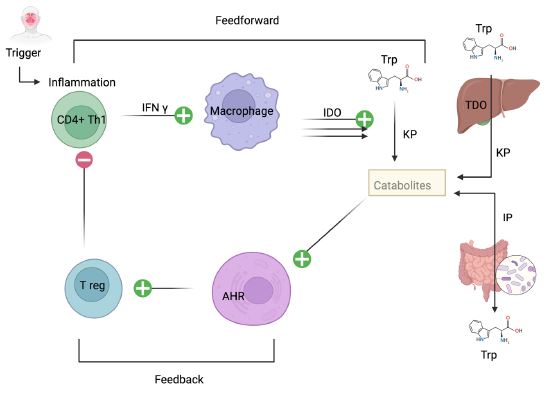
Figure 1: Supplemental Trp in the loop of the Th1 line.
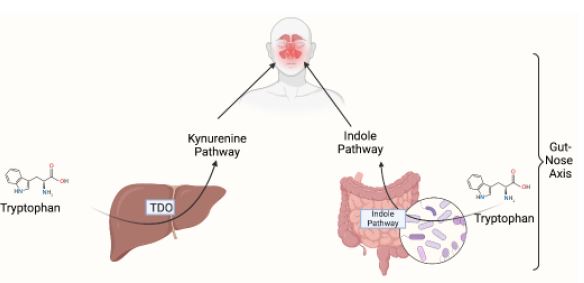
Figure 2: Supplemental Trp, microbiome and the “gut-nose axis.”
Supplemental Trp also induces the TDO in the liver and augments the liver KP and the number of catabolites /AHR ligands.
Supplemental Trp also boosts the IP in the gut. Metabolites of the IP are ligands of the AHR [23,25-29,35,40,41]. Trp both affects the microbiome and depends on it. As mentioned, Trp can change the composition and function of the microbiome affecting intestinal and extraintestinal host immunity [19,20,26,27,42]. A “gut-nose axis” (Figure 2) is likely, present among other axes in the microbiome-host interactions. Obviously, co-operation of the microbiome with Trp is variable and so is the response to treatment.
The two components of supplemental Trp effect (Figures 1 & 2) are not mutually exclusive, they can co - exist and cross talk. Supplemental Trp needs to be given in substantial amounts to exert its augmenting effect. We believe that future research will confirm our hypothesis.
Limitations and strength of the study
The patients’ sample size is relatively limited, and the study lacks a control group. Hence, the obtained evidence is preliminary and needs confirmation in further research.
On the other hand, the study is prospective, and the patients have been monitored for 1- 4 years. We observed relapses of symptoms off Trp and again amelioration of symptoms on Trp. Such course argues against natural spontaneous improvement and the therapeutic effect seems to be convincing.
In this case series, supplemental Trp in a dose of 2 gm a day was administered to a group of 19 patients with PND for 1-4 years. Trp was well tolerated and led to moderate - substantial improvement in 89 % of treated patients. We propose a two -component model explaining the anti-inflammatory / immunomodulating effect of supplemental Trp based on Trp kinetics and existing evidence.
To the best of our knowledge, this is the first report of the therapeutic effect of supplemental Trp in PND. We believe that this application of the supplemental Trp merits further research.
Conflict of interests
The authors have no conflicts of interest to report.
Acknowledgments
The authors are grateful to librarians Arpitta Bose, Yvette Walton and Naomi Benoit for their kind assistance.
We always work towards offering the best to you. For any queries, please feel free to get in touch with us. Also you may post your valuable feedback after reading our journals, ebooks and after visiting our conferences.

