


| Received | : | Sep 01, 2025 |
| Accepted | : | Sep 24, 202 |
| Published Online | : | Oct 10, 2025 |
| Journal | : | Annals of Epidemiology and Public Health |
| Publisher | : | MedDocs Publishers LLC |
| Online edition | : | http://meddocsonline.org |
Cite this article: Gongault Bany AC, Gilbert N, Jethro M, Ange Clauvel N, Antoine Abena A, et al. Knowledge, Attitudes, and Practices Among Vendors Engaged in the Sale of Street Medicines in Brazzaville, Republic of the Congo. A Epidemiol Public Health. 2025; 8(2): 1128.
Introduction: In sub-Saharan African countries, and particularly in Republic of Congo, the street sale of medicines, often of inferior quality is widespread and poses a growing threat to public health. This study aims to describe the Knowledge, Attitudes, and Practices (KAP) of street medicine vendors operating in the markets of Brazzaville. descriptive cross-sectional study was conducted from January to September 2024. The survey was carried out among vendors selected using a stratified sampling method. The data were collected using an anonymous questionnaire and analysed with Microsoft Excel 2010. Out of 2044 respondents, 79.4% were men, mainly aged 30 to 49 years (50.5%), and 54.9% had completed secondary education. Socioeconomically, 86.3% had been engaged in this activity for more than 10 years, although 78.9% had received no formal training. Regarding their knowledge, 63.7% claimed to fully understand the products they sold, yet supply chains were largely informal, with 31.4% obtaining medicines from unlicensed wholesalers. In terms of attitudes, only 47.6% were aware of the dangers associated with street medicines, and 22.6% believed that government interventions were adequate. Practices revealed major shortcomings, with 27.9% of vendors storing medicines in cardboard boxes without proper packaging. In conclusion, despite a relatively high level of education, street medicine vendors in Brazzaville have only partial knowledge of the risks associated with informal medicines and rely on unregulated supply chains. Storage conditions are often inadequate, and there is significant mistrust of health authorities. This highlights weak pharmaceutical governance and a well-established informal market. Strengthening regulation, improving awareness, and integrating vendors into a formal framework are essential steps toward improving public health safety. These measures are crucial to mitigate the risks posed by street medicines in urban areas.
Keywords: Street medicines; Informal sale; Knowledge; Attitudes, and Practices (KAP); Brazzaville; Public health; Pharmaceutical governance.
Medicines, as curative or preventive substances, represent a strategic public health commodity whose quality and safety must be rigorously ensured to protect populations and reduce morbidity and mortality [1,2]. However, the illicit medicine market is undergoing a concerning global expansion, fueled by persistent poverty, inequitable access to healthcare services, and fragile regulatory frameworks that fail to effectively control the circulation and quality of pharmaceuticals [3]. The World Health Organization (WHO) estimates that one in ten medicines consumed in low- and middle-income countries is either falsified or of substandard quality. This alarming statistic translates to an estimated 500,000 annual deaths in sub-Saharan Africa alone, emphasizing the critical public health challenge posed by poorquality medicines [4,5]
In many African countries, the phenomenon of “Street Medicines” (SM) has become particularly pervasive, especially in urban and peri-urban areas where informal markets serve as primary access points to pharmaceuticals for large segments of the population. These medicines, sold outside of official and regulated channels by untrained and unlicensed vendors, pose significant health risks, including toxic reactions, therapeutic failure, the development of antimicrobial resistance, and increased burden on health systems [6,7]. The knowledge possessed by these vendors is frequently based on anecdotal experience or traditional beliefs rather than formal training or scientific evidence. Moreover, their storage and handling practices are often inadequate, further compromising the quality and efficacy of the medicines offered [8–10].
In the Republic of Congo, various studies have shed light on the widespread availability and use of street medicines, as well as their detrimental effects on public health. However, epidemiological data concerning the Knowledge, Attitudes, and Practices (KAP) of street medicine vendors remain scarce and fragmented. For instance, a survey conducted between 2018 and 2020 in Brazzaville documented frequent utilization of street medicines in unsafe practices such as clandestine abortions [11]. Earlier, in 2012, authorities reported nearly 937 illicit medicine sales points operating within the city’s informal economy [12]. Between 2015 and 2019, additional research highlighted the health risks linked to medication misuse stemming from purchases made from informal vendors, including improper dosing and counterfeit products [13]. More recently, a 2021 study revealed the significant role that informal vendors play in the unregulated distribution of tramadol among young populations, especially adolescents, raising concerns over substance abuse and addiction [14].
Given this background, the epidemiological landscape regarding the KAP of street medicine vendors in Brazzaville is inadequately documented, hindering the design of effective interventions. This study aims to fill this critical knowledge gap by providing updated and comprehensive data on vendors’ awareness, attitudes toward risks, and their everyday practices related to the sale of street medicines. These insights are essential to inform public health policies, improve regulatory oversight, and develop targeted awareness campaigns to reduce the health risks associated with informal medicine markets. Strengthening pharmaceutical governance and integrating informal vendors into formal health systems could ultimately enhance medicine safety and contribute to better health outcomes in urban settings where street medicine sales are entrenched.
Study design
This descriptive cross-sectional study was conducted in Brazzaville, the capital of the Republic of the Congo, over a ninemonth period from January 5 to September 10, 2024. The study setting included four health districts randomly selected from the ten districts in the city. Within each district, one market was randomly chosen as the survey site.
The study population consisted of Street Medicine Vendors (SMVs) operating in the markets of the selected districts. Included were vendors with fixed stalls in these markets who had reached the legal age of majority. Vendors who were absent during the survey were not included. In addition, itinerant vendors, vendors originating from other districts, and individuals who refused to participate were excluded from the study.
Data collection was performed using a standardized questionnaire administered face-to-face by trained interviewers. The questionnaires were anonymous and aimed to gather information on the knowledge, attitudes, and practices (KAP) of street medicine vendors.
Sample size determination
The minimum sample size was estimated using the Schwartz formula:
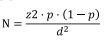
Assuming an estimated proportion of p = 0.5 by default, a margin of error d = 0.07, and a 95% confidence interval (z=1.96), the minimum required sample size was 196 vendors. A total of 204 street medicine vendors were ultimately included, ensuring the statistical power of the study.
Sampling
Sampling was conducted using a three-stage stratified method to ensure representativeness of Street Medicine Vendors (SMVs) across the different health districts of Brazzaville. Since the city is divided into ten health districts, a simple random sampling was first performed to select four districts, each representing a distinct geographic stratum of the city.
Next, within each selected district, one market was randomly chosen among those identified as locations where medicines are sold outside official channels. The choice to focus on markets aimed to capture vendors who were relatively stable and established, thereby excluding more mobile and difficult-totrace forms of sales.
Finally, in each randomly selected market, an exhaustive inclusion of all street medicine vendors with fixed stalls who were present at the time of the survey and met the inclusion criteria was conducted. This exhaustive approach at the market level aimed to minimize selection bias and ensure the internal validity of the study.
This three-stage sampling method thus combines geographic representativeness, diversity of sales contexts, and operational exhaustiveness within selected sites, while respecting the logistical and ethical constraints of the study.
Study variables
The study considered four main categories of variables:
• Sociodemographic and economic variables: sex, age, nationality, marital status, religion, education level, number of dependents, initial training, relationship between initial training and medicine-selling activity, role in the activity, length of time in the trade, and monthly income generated.
• Knowledge variables: vendors’ level of knowledge about medicines and their contraindications, sources of supply, perception of street medicine regulation, assessment of risks related to their use, and evaluation of their quality.
• Attitude variables: awareness of the dangers of street medicines, perception of authorities’ actions, opinions on imposed sanctions, and recognition of street medicines as a public health issue.
• Practice variables: supply methods, sales on credit, medicine storage conditions, possibility of contacting the vendor in case of an incident, and distribution of products outside official markets.
Data analysis
Data analysis was primarily descriptive in nature. Variables were grouped into four main dimensions: sociodemographic and economic characteristics, knowledge, attitudes, and practices. For each variable, descriptive statistics were calculated, including simple and relative frequencies for categorical variables, as well as means and standard deviations for quantitative variables. Key trends and distributions were summarized and presented using tables and graphs to enhance clarity and facilitate interpretation of the results. Cross-tabulations and frequency distributions were used to explore patterns within and between variable categories. All data processing and analysis were performed using Microsoft Excel (version 2010; Microsoft Corporation, USA). Although Excel was primarily used for descriptive statistics and visualization, care was taken to ensure accuracy through systematic data cleaning and validation procedures prior to analysis. Where applicable, missing data were handled by excluding incomplete cases from specific analyses to maintain data integrity.
Main characteristics of participants
Among the 204 street medicine vendors surveyed, the majority were male (79.4%). The most represented age group was 30 to 49 years (50.5%), followed by those aged 50 years and older (32.8%), while vendors under 30 years accounted for 16.7% of the sample. Nearly all vendors were of Congolese nationality (86.3%). Regarding education level, more than half (54.9%) had completed secondary education, 26% had higher education, 13.2% had primary education, and 5.9% had no formal education. For further details on sociodemographic characteristics, see Table 1.
Knowledge, perceptions, and opinions
The majority of vendors (63.7%) reported having full knowledge of the products they sell, although their sources of supply were predominantly informal, particularly unlicensed wholesalers (31.4%) and personal contacts (26.5%). Nearly half of respondents (44.6%) believed that existing regulations should be improved, while one-quarter (24.5%) considered them to be misaligned with on-the-ground realities. The most commonly perceived risks were adverse side effects (36.8%) and treatment inefficacy (25.0%). Additionally, 91.7% of vendors believed that street medicines were equivalent to or better than those distributed through official channels.
 Table 1
Table 1: ociodemographic and economic characteristics of street medicine vendors surveyed in Brazzaville (n=204).
Table 2
Table 2: Knowledge, perceptions, and opinions of street medicine vendors.
Table 3
Table 3: Sales practices and storage conditions of street medicine vendors in brazzaville (n=204).
Attitudes
The assessment of vendor attitudes toward street medicines and public health regulations revealed a complex set of perceptions. Nearly half of the respondents (47.6%) reported being aware of the health risks associated with the sale and use of street medicines, indicating a certain level of awareness despite operating outside formal pharmaceutical channels. However, only 22.5% believed that the national health authorities were actively involved in regulating or controlling the informal drug market, suggesting a perceived lack of institutional oversight.
Resistance to enforcement measures was also notable: a large majority (82.8%) of vendors expressed opposition to any form of repression or punitive action against street medicine sales. Furthermore, 35.8% of participants reported explicit distrust of health authorities, which could pose a significant barrier to the implementation of public health interventions aimed at reducing the circulation of unregulated medications.
Practices
The majority of Street Medicine Vendors (SMVs) in Brazzaville reported selling their products primarily through cash transactions (76.0%), while a smaller proportion (18.6%) offered credit-based sales. Among those who allowed purchases on credit, 58.3% did so occasionally, and 7.8% reported offering credit frequently.
Regarding storage practices, the conditions were often suboptimal and raised significant concerns about the preservation of drug quality. A total of 39.7% of vendors stored their products in a dry place, 27.9% kept them in cardboard boxes at home, and 23.0% used non-refrigerated storage facilities. Only 5.4% had access to refrigerated storage, with an even smaller number storing medicines in refrigerators (0.5%) or exposing them to direct sunlight (1.5%), which can degrade the efficacy and safety of pharmaceutical products.
In the event of adverse effects or discomfort following the use of street medicines, 54.4% of vendors reported never being contacted by clients, while 32.4% were rarely contacted. This limited traceability highlights a critical gap in post-sale accountability and consumer safety.
Concerning the distribution channels of these products, the majority (60.3%) of vendors reported that street medicines were sold within health centers, 9.3% in provincial outlets, and 27.5% in various other locations. Notably, only 2.9% reported any sale of these products through official pharmacies, underscoring the informal and largely unregulated nature of their distribution networks.
The survey conducted in Brazzaville identified Street Medicine Vendors (SMVs) as predominantly male (79.4%) adults, primarily aged 30–49 years. This sociodemographic profile aligns with informal sector employment patterns observed in sub-Saharan Africa, typically dominated by men in their economically active years, often supporting dependents and seeking income stability in fragile economic contexts [15].
Moreover, the finding that over half of vendors (54.9%) possess secondary education challenges the stereotype that illicit drug vending is restricted to illiterate populations. This suggests that the activity may represent a pragmatic economic alternative amid high unemployment, including among the educated. Consequently, the SMV market functions as a parallel, accessible, and poorly regulated professional domain, offering shortterm economic viability [16].
However, despite educational attainment, only 63.7% of vendors reported full knowledge of the products sold, likely reflecting overestimated self-assessment. Indeed, knowledge appears predominantly empirical and informally transmitted, lacking scientific validation, posing significant risks to consumer safety [17].
Furthermore, supply chains are largely informal and opaque, with unlicensed wholesalers (31.4%) and personal contacts (26.5%) predominating. These unregulated channels lack quality assurance, increasing the risk of counterfeit, degraded, or substandard products entering the market. This situation is exacerbated by the absence of a national drug traceability system and weak pharmaceutical regulation in Congo [18]. Thus, these systemic weaknesses, rather than individual factors, facilitate the persistence and growth of the informal SMV market. Vendors operate within a form of institutionalized informality, tolerated as economic actors addressing unmet demand in the formal sector [19].
In addition, regulatory perceptions among vendors are ambivalent: 44.6% advocate for improved regulation, while 24.5% consider existing policies misaligned with local realities. This disconnect underscores the failure of top-down regulatory approaches that do not adequately account for the socioeconomic context of informal vendors, a phenomenon also documented in Ghana and Nigeria [20,21].
Regarding attitudes, only 47.6% of vendors reported awareness of the risks associated with street medicines, a concerning finding given the lack of professional supervision and the prevalence of poor-quality products. Moreover, 82.8% of vendors opposed repressive measures, indicating that coercive enforcement strategies may be ineffective or counterproductive, potentially fostering distrust toward authorities [22]. Indeed, 35.8% of vendors explicitly expressed mistrust of health authorities, hindering sustainable collaboration and highlighting the need for inclusive, community-based strategies to rebuild trust [23].
Concerning practices, storage methods observed were frequently inadequate, with many vendors storing products in suboptimal conditions such as cardboard boxes at home (27.9%), non-refrigerated warehouses (23.0%), or direct sunlight exposure (1.5%). Such practices substantially increase the risk of active ingredient degradation, reducing therapeutic efficacy and potentially contributing to antimicrobial resistance [24]. The minimal use of refrigeration (0.5% in refrigerators, 5.4% in refrigerated warehouses) reflects insufficient infrastructure within the informal supply chain.
Furthermore, regarding pharmacovigilance, 54.4% of vendors reported never being contacted following adverse events, illustrating the absence of monitoring mechanisms. Unlike formal pharmaceutical supply chains where traceability facilitates adverse event detection, informal markets lack such systems, delaying identification and mitigation of drug safety issues [25].
A critical and alarming finding concerns distribution channels: 60.3% of vendors reported sales within health centers, raising serious concerns about the infiltration of informal medicines into formal healthcare settings. This institutional permeability undermines pharmaceutical safety and healthcare quality and suggests possible internal collusion or regulatory lapses, as reported in other Central African countries [26].
In summary, the data demonstrate that street medicine vending in Brazzaville constitutes a structured, socially tolerated economic system. Therefore, purely punitive approaches are insufficient. Multi-faceted strategies combining education, regulatory reinforcement, formal sector support, and community engagement are required to develop viable alternatives that safeguard public health while addressing economic realities.
This study reveals that street medicine vendors in Brazzaville demonstrate partial awareness of risks associated with informal drug sales. Moreover, substandard storage conditions and significant mistrust toward health regulations characterize the market, reflecting fragile pharmaceutical governance and a well-established informal sector. Hence, strengthening regulatory frameworks, enhancing awareness campaigns, and integrating vendors into formalized systems are critical steps toward improving drug safety and reducing health risks linked to street medicines in urban contexts.
We always work towards offering the best to you. For any queries, please feel free to get in touch with us. Also you may post your valuable feedback after reading our journals, ebooks and after visiting our conferences.

