


| Received | : | May 12, 2026 |
| Accepted | : | May 28, 2026 |
| Published Online | : | Online: Jun 04, 2026 |
| Journal | : | Annals of Epidemiology and Public Health |
| Publisher | : | MedDocs Publishers LLC |
| Online edition | : | http://meddocsonline.org |
Cite this article: Attoh-Toure H, Serigbalet A, Marie-Michelle Abina A, Konan Roland O, N’guessan K, et al. Determinants of Career Choice in Public Health Among Medical Students: A Cross-Sectional Study at The Faculty of Medical Sciences, Abidjan. Public health choices by medical students. A Epidemiol Public Health. 2026; 9(1): 1135.
Introduction: In sub-Saharan Africa, only 5.8% of medi cal students choose public health as their future specialism, despite critical needs in the areas of prevention and health promotion. This study aimed to identify the determinants of career choice in public health among final-year medical students at the Faculty of Medical Sciences in Abidjan.
Method: We conducted a cross-sectional analytical study in 2024 involving 350 fifth- and sixth-year students. Data were collected via a self-administered questionnaire. A mul tivariate logistic regression analysis was performed with a significance level of 5%.
Results: The response rate was 70% (350/500). The mean age was 23.4 years (±2.1), with 58% being male. Ap proximately 39% (138/350) of students chose public health as their future career. The majority (57%) had an average level of knowledge of the discipline. Multivariate analysis identified four significant determinants of choosing public health: the perception of practitioners as leaders (OR=2.14; 95% CI: 1.15–4.06; p=0.017), disagreement with the idea that opportunities for practice are limited (OR=2.03; 95% CI: 1.02–4.16; p=0.048) or that specialization is difficult (OR=2.14; CI=1.15–4.06), and interest in health promotion (OR=2.30; 95% CI: 1.11–4.91; p=0.028).
Discussion: Perceptions of professional leadership, ca reer opportunities and interest in health promotion are key determinants that could guide strategies to attract profes sionals to this discipline, which is essential for developing countries
Keywords: Career choices; Public health; Medical students.
Globally, Africa accounts for 18% of the world’s popula tion [1], bears a quarter of the disease burden, and receives less than 2% of the financial resources allocated to health [2]. Furthermore, this region faces a double burden characterized by the persistence of infectious diseases as the leading cause of death, alongside an alarming rise in non-communicable dis eases [3]. In light of the shortage of healthcare workers in Af rica, where only 3% of the world’s healthcare professionals are based, the WHO has set a minimum threshold of 1 doctor per 1,000 inhabitants [4] in line with SDG 3.c.1. In 2022, the doctor to-population ratio stood at 1.72 doctors per 1,000 inhabitants, with figures ranging from 9.43 in Cuba to 0.021 in Guinea
[5]. In Côte d’Ivoire, this ratio stood at 1.75 doctors per 1,000 inhabitants in 2023, with regional disparities meaning that few er than 40% of health districts met the WHO standard [6,7].
Among the various medical specialties, public health has cer tain strengths that can help to resolve some of the issues at hand. Public health has been defined in many different ways over the years [8], but one consistent theme emerges. This in volves a comprehensive approach to addressing all aspects of a population’s health issues. Tailored to the realities of develop ing countries, public health is a vital discipline due to its impact on disease prevention, which is of paramount importance for countries with impoverished populations unable to bear the high costs associated with illness [7,9-11]. As developing coun tries need to improve their prevention strategies, this discipline is of crucial importance due to various components, such as health promotion, health education, nutrition and vaccination, which interact to influence the overall well-being of populations.
However, in practice, public health is not one of the disci plines prioritized by trainee doctors. Indeed, 5.8% of students in sub-Saharan Africa [12] and, more specifically, 4.3% in Côte d’Ivoire [13] have chosen public health as their future special ism. We therefore sought to investigate the factors influencing students’ decision-making regarding their career choice. No in-depth study has been conducted in our context, despite the importance of this specialism for our country and its low appeal among students.
We therefore felt it was important to conduct this study to estimate the proportion of students wishing to practice in this field, as well as the factors underlying this choice. More spe cifically, the aim was to clarify their career choice, identify their knowledge and perceptions of public health, and understand the motivations behind their career choice.
Type and duration of study
We conducted an analytical cross-sectional study at the Abi djan Medical Sciences Teaching and Research Unit (UFR SMA) within Félix Houphouët Boigny University in Abidjan during the 2024–2025 academic year, specifically between September and December 2024.
Study population
Students duly enrolled in the 5th and 6th years of medical school during the aforementioned academic year were eligible for this study. These students were interviewed about their de cision to pursue public health and the motivations behind their career choices.
Sampling
This was a comprehensive study covering all students en rolled in these two years.
Data collection tools
Data were collected using pre-tested, anonymous individual questionnaires, which were self-administered to students either in person or online. The questionnaires covered their socio-de mographic characteristics, their knowledge and perceptions of public health, their career choices, and the factors influencing these choices. The questionnaire was based on that of Wright et al. [14], translated and validated by Beaulieu [15], and then modified to suit our context.
Data entry and analysis
Data analysis was carried out using R 4.4.2 and R Studio 2024 software.
Knowledge levels were assessed on the basis of nine items evaluating understanding of the discipline, its sub-fields, and its applications. The classification thresholds adopted were: low level (<50%), average level (50–70%), and high level (>70%). The statistical tests used were Pearson’s chi-square test with a sig nificance threshold of 5% and Fisher’s exact test in cases where the chi-square test was not applicable. The logistic regression model was used in multivariate analysis to establish the rela tionship between the choice of public health and the explana tory variables. Furthermore, a knowledge level score was ad opted after verification of the responses and the assignment of an overall mark based on correct answers to the relevant items. The variables used for the logistic regression model were those with a p-value < 0.20. The adjusted odds ratio and its 95% confi dence interval were determined to quantify the association be tween the choice of public health and the various explanatory variables in the model. A statistical significance threshold of p < 0.05 was adopted for the final model.
Ethical considerations
The conduct of our study took the following ethical consider ations into account: authorization from the Director of the SMA Faculty, obtaining informed consent from patients, and ensur ing confidentiality and anonymity during data processing.
Sample characteristics
We received 408 questionnaires out of 500. After reviewing the questionnaires, 58 were excluded due to incomplete data. Consequently, 350 students were included in the study, repre senting 70%.
The mean age was 23.4±2.1 years (range: 19–28 years), with a predominance of males (58%). Sixth-year students accounted for 62% of the sample. Their fathers were university graduates (48%), whilst their mothers had completed secondary educa tion (32%). The majority lived with their families (54%) and wished to practice in an urban setting (63%).
Knowledge and perception of public health
The main sources of information on public health were theo retical lectures (92.6%) and practical placements (70.0%). The vast majority of students (89%) correctly defined public health according to the WHO. Epidemiology was the best-known sub discipline (98.3%), followed by health promotion (82.0%).
Regarding knowledge levels, 57% of students had an average level, 39% a low level and 4% a good level (Figure 1).
Perceptions of public health were generally positive. The ma jority of students viewed the discipline favorably (84%), consid ered it an intellectual challenge (68%), and recognized its neces sity for the country (95%). They saw public health specialists as leaders (66%) with good personalities (68%) and financial secu rity (58%). However, less favorable perceptions concerned the perceived limited opportunities for practice (49% disagreed) and the difficulty in acquiring the skills required to practice (44% disagreed).
Career choices and specialism interests
Among the 350 students, 138 (39.4%) stated that they wished to make public health their career specialism. For those not choosing public health (n=212), the most popular special isms were obstetrics and gynecology (12.7%) and anesthesia and intensive care (11.8%). Among students interested in pub lic health, 73% wished to combine it with a second specialism, primarily pediatrics (13 students) and medical imaging (12 stu dents). Vaccinology was the most attractive public health subspecialty (37.1%), followed by global health (26.3%) and epide miology (23.7%).
Multivariate analysis: determinants of career choice
Multivariate logistic regression analysis, after adjusting for confounding variables, identified four significant independent determinants of career choice in public health (Table 1).
Thus, students who perceived public health specialists as leaders were 2.14 times more likely to choose this specialty (adjusted OR=2.14; 95% CI: 1.15–4.06; p=0.017). Students who disagreed with the idea that opportunities for public health practice are limited were 2.03 times more likely to choose it (adjusted OR=2.03; 95% CI: 1.02–4.16; p=0.048). A strong inter est in health promotion was associated with a 2.30-fold higher likelihood of choosing public health (adjusted OR=2.30; 95% CI: 1.11–4.91; p=0.028). Those for whom the public health special ization was not difficult were 2.01 times more likely to choose this discipline (adjusted OR=2.01; 95% CI: 1.01–4.05; p=0.049).
The other dimensions assessed did not show any significant association in the multivariate analysis.
 Table 1
Table 1: Logistic regression analysis of the relationship between career choices in public health and dependent variables (n=350).
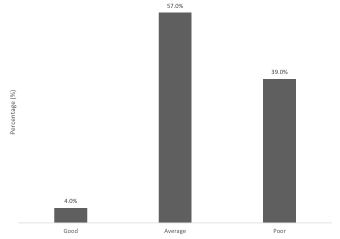
Figure 1: Breakdown of respondents by level of knowledge of public health (n=350).
Knowledge of public health
A significant proportion of students (39%) had a poor under standing of public health. These findings echo those of Sebbani et al. [16] in Morocco, where they found that medical students had a poor understanding of public health. In our study, the main source of information remains public health lectures. Sev eral reasons could be put forward to explain this finding. Firstly, the multitude of sub-disciplines within public health could be a source of confusion for students. Furthermore, there has been a reduction in the number of hours allocated to theoretical lec tures since the implementation of the Bachelor’s-Master’s-Doc torate system in Côte d’Ivoire. Moreover, students undertake only a single placement in a public health department at one of the two designated institutions throughout their entire uni versity course, in their fifth year, lasting six weeks. In the study by Rahma et al. [17] in the United Arab Emirates, nearly 94% of students had a good understanding of public health follow ing a public health placement. Thus, greater exposure to pub lic health practitioners, as well as placements in public health implementation settings, such as national programs, could ad dress this knowledge gap.
Perceptions of public health
Overall, our study suggests that students held a positive view of public health. These findings indicate a general recognition of the strategic role of public health within health systems, par ticularly in developing countries such as our own. In a study in Morocco, however, public health was viewed by many as a spe cialism that was only attractive during emergencies [16].
Public health specialists were seen by our respondents as leaders with good personalities and financial security. This can be explained by the prestige accorded to practitioners of this discipline in the country, given the high-ranking positions they have held. This is the case for several health ministers, promi nent members of the government and the scientific community, and, even closer to them, public health professors, who are also role models with whom they can identify and relate to.
Career choices in public health
In our study, 39% of students chose public health as their career specialism. In 2021, 4.7% of medical students in Côte d’Ivoire opted for public health [13]. In Togo, 5.62% chose it [18] and 5.8% in a meta-analysis including 32 studies from sub Saharan Africa [12].
This discrepancy can be explained by the new perspective on the specialism in light of international events marked by Co vid-19. This is the case in Sebbani’s study [16], where 59% had a new perspective on this discipline following the pandemic. In deed, the fight against this pandemic has highlighted the role of public health in medical practice at all levels and has given it a much more practical image, different from the one students had previously. A trend that can be glimpsed in the study by Ekouevi et al. [19], where 25% of students in Guinea-Conakry expressed a desire to pursue public health, coinciding with the end of an Ebola virus epidemic. Furthermore, as a multidisci plinary specialism, it offers those who choose it the opportu nity to combine it with another discipline. This is the case for over 73% of students who plan to combine public health with a second discipline. The majority of students (13%) chose to combine public health with pediatrics. As a developing country, Côte d’Ivoire, in order to improve certain indicators that remain low—particularly regarding maternal and child health—faces a critical shortage of genuine specialists in this field. Pediatrics and gynecology, combined with sub-disciplines such as vaccin ology, reproductive health and nutrition, are essential for re ducing infant and child mortality.
Multivariate analysis
Multivariate logistic regression analysis, after adjusting for confounding variables, identified four significant independent determinants of career choice in public health (Table I). Thus, students who viewed public health practitioners as leaders were twice as likely to be interested in public health (OR=2.14; CI=1.15–4.06) than others. Indeed, a leader is someone who is easily taken as a role model and whose footsteps one wishes to follow. Students who have been exposed in some way to the leadership of certain specialists in the field are logically more inclined to follow this path.
Respondents were half as likely to choose public health if they perceived the CES as difficult (OR= 2.14; CI=1.15–4.06) or public health practices as limited (OR=2.01; CI=1.01–4.05). Indeed, given the average level of knowledge about the disci pline, it is easy to understand that a lack of information about the specialism, as well as limited exposure for some, may work against public health. A discipline for which few career opportu nities are apparent is unlikely to be chosen as a student’s career path. Similarly, a specialism deemed too difficult will rarely be appealing.
For the students in this study, the desire to practice health promotion (OR=2.30; CI=1.11–4.91) also doubled the likelihood of pursuing a career in public health. As an essential component of public health, it is logical that those interested in health pro motion would be more inclined to practice in this field.
Study limitations
The study is limited to a single training and research unit out of the two in the country, making it difficult to generalize to other French-speaking countries.
Furthermore, the population was restricted to final-year students. Career motivations and the maturing of choices likely differ across years of study, meaning that the results reflected only aspirations at the end of training, not the overall trajectory.
Finally, we conducted a cross-sectional study. There was no established time series, making it impossible to determine the direction of causality.
These limitations suggest that this study should be regarded as exploratory and hypothesis-generating, rather than confir matory.
This cross-sectional study of final-year medical students in Côte d’Ivoire revealed that a growing proportion are consid ering a career in public health, a significant finding given the shortages of specialized human resources in resource-limited countries. Although a latent interest was identified among the cohort studied, these data highlight the importance of trans forming intentions into actual career choices through targeted interventions at the curricular and institutional levels. Modifi able determinants of this attractiveness, such as promoting the professional leadership of public health specialists, early exposure to the diversity of professions, and the enhanced in tegration of practical public health modules into initial training, constitute strategic levers for health human resources planning in Côte d’Ivoire. These investments in the attractiveness of the discipline are essential for strengthening public health capacity and contributing to the achievement of the Sustainable Devel opment Goals. Longitudinal studies documenting the trajectory from intentions to actual career choices, as well as impact as sessments of curricular interventions, are imperative to guide health human resources policies.
Conflicts of interest
No conflicts of interest to declare.
Contributions of authors
Harvey ATTOH-TOURE and Arthur SERIGBALET developed the study protocol; Audrey ABINA, Roland OUSSOU, and Arthur SERIGBALET collected and analysed the data; Harvey ATTOH TOURE, Audrey ABINA and Soualihou NOUFE interpreted the data; Harvey ATTOH-TOURE, Audrey ABINA and Arthur SERIG BALET wrote the manuscript; Konan N’GUESSAN and Issaka TIEMBRE reviewed it; All authors reviewed and approved the final version of the manuscript.
We always work towards offering the best to you. For any queries, please feel free to get in touch with us. Also you may post your valuable feedback after reading our journals, ebooks and after visiting our conferences.

