


| Received | : | Aug 24, 2026 |
| Accepted | : | Sep 15, 2026 |
| Published Online | : | Online: Oct 06, 2026 |
| Journal | : | Annals of Epidemiology and Public Health |
| Publisher | : | MedDocs Publishers LLC |
| Online edition | : | http://meddocsonline.org |
Cite this article: Ookeditse O, Kebadiretse K O, Thusego R M, Gosiame M, Yaone B, et al. Age and medical insurance discrepancies and similarities on knowledge of ischemic stroke symptoms and risk factors among public and outpatients in Sub-Saharan Africa: a cross-sectional questionnaire study in greater Gaborone, Botswana. A Epidemiol Public Health. 2026; 9(2): 1141.
Objectives: We determined knowledge of stroke symptoms and risk factors based on age and medical insurance among outpatients with stroke risk factors and the general public in a cross-sectional study from Botswana.
Method: Open-ended questionnaires on awareness of 8 stroke symptoms and 10 risk factors were administered by research assistants to a representative selection of outpatients and the public.
Results: The response rate was 93.0% for the public (2013) and 96.6% for outpatients (795). Public respondents had a mean age of 36.1±14.5 years (age range 18–90 years) and 45.5% were males, while outpatients had a mean age of 37.4±12.7 years (age range 18-80 years) and 41.9% were males.
Among all ages, outpatients had higher awareness than the public for 5 out of 8 stroke symptoms and for 6 out of 10 stroke risk factors (p<0.05). Based on medical insurance among the public, those without medical insurance had higher awareness than those with medical insurance for acute headache (38.0% vs 17.4%), blurred/double vision (32.3% vs 6.5%) and confusion (31.4% vs 9.8%).
Among both public and outpatients without medical insurance, lower knowledge of stroke symptoms was associated with family history of stroke, high physical activity, and normal BMI (p<0.05).
Conclusion: Results call for policy makers and other stakeholders for urgent educational campaigns on knowledge of stroke targeting both low- and high-risk respondents based on their ages and medical insurance status if we are to reduce the scourge of stroke in Sub-Saharan Africa.
Keywords: Stroke symptoms; Stroke risk factors; Medical insurance; Outpatients; Age; Public; Awareness; Knowledge; Botswana.
Stroke is the second-leading cause of mortality worldwide after ischaemic heart disease [1]. Low- and Middle-Income Countries (LMIC) are already grappling with 80% of stroke burden since 2010 with 91.4 million disability-adjusted life-years (DALYs) [2-3], and with the African continent having the highest age-standardized incidence of stroke worldwide [4].
Revascularization, which is management of acute ischemic stroke and is time-dependent, has shown better clinical outcomes and improvement in DALYs [5-7]. Various obstacles in acute stroke management have been demonstrated to vary from lack of healthcare resources to limited knowledge of stroke symptoms among people [8-13]. Good awareness of stroke is likely to improve the number of people receiving acute management (thrombolysis/ thrombectomy) [14] hence low mortality and morbidity.
Having knowledge of stroke risk factors might improve primary prevention [14], through lifestyle modification [15] and efficient control of cardiovascular risk factors. However, a high portion of stroke high-risk patients are not aware of their risks [9-10,15-22]. Globally, sparse studies have been conducted on patients to assess awareness of stroke symptoms and risk factors [9-10,15-22] compared to many public studies [9-14,23- 40]. Few of these studies in Sub-Saharan Africa and none globally based on medical insurance status has been carried out.
Objectives:
1. To assess awareness and knowledge of stroke symptoms and risk factors based on age and medical insurance among the public and outpatients in Botswana.
2. To assess whether medical insurance based sociodemographic and stroke risk factors are associated with stroke knowledge among the public and outpatients
Study design and population
In this cross-sectional questionnaire study, participants were recruited. The study recruited two groups (general public and stroke-risk outpatients) from greater Gaborone, Botswana. For more information see eFigure 1a and previous studies [41-42].
Inclusion and exclusion criteria
Refer to previous studies [41-42].
Ethical statement
Ethical clearance for this study was granted in accordance with the Helsinki declaration for medical research from the following institutional review committee and as shown in previous studies [41-42]: University of Botswana, Ministry of Health and Wellness in Botswana, Health Research and Development Division (ref. no. HPDME: 13/18/1) while exempted by the Regional Ethics Committee, South East, section C (ref. 2018/774/ REK), Norway. The study was reported in accordance with the Strengthening the Reporting of Observational Studies in cross sectional survey (STROBE) reporting guideline [43].
Data collection instrument
The questionnaire tool used in the study was adapted from previous studies [18-19,24-26] with some adjustments based on the following recent guidelines: American Heart Association/ American Stroke Association (AHA/ASA) and European Stroke Organization [44-45].
The questionnaire tool was anonymous, electronic-based using tablets (Samsung Galaxy Tab 3 Lite, 7.0 Android, South Korea), standardized, written, and administered in English or local language (Setswana).
Open-ended questions were used to determine awareness or knowledge of stroke symptoms and risk factors, as closedended questions might overestimate the real level of awareness and knowledge [8,29].
The questionnaire was divided into various sections as shown in eFigure 1b and below.
Sociodemographic characteristics: Refer to eFigure 1b and previous studies [41-42].
Awareness and knowledge of stroke symptoms and risk factors: Awareness of eight symptoms and ten risk factors of stroke were assessed by individual’s response to open-ended questions (eFigure 1b): “Can you name symptoms of stroke?” or “Can you name conditions or lifestyle habits that may predispose to stroke?” respectively. Each correct answer scored 1 point and considered aware while any other answer scored 0. Awareness was defined as awareness rate of each spontaneously recalled symptom/risk factor, while knowledge was defined as mean scores of total recalled symptoms/ risk factors out of eight or ten respectively.
Respondents’ stroke risk factors: Refer to previous studies [41-42]. For calculating physical activities intensities, we used International Physical Activity Questionnaire with comparable variables [46] and for body mass index as recommended by the World Health Organization (WHO) and National Institutes of Health (NIH) [47-48].
Awareness and knowledge of stroke symptoms and risk factors were further stratified by age and medical insurance status.
Statistical analysis
Continuous variables were expressed as mean ± Standard Deviation (SD) / 95% confidence interval (CI). while categorical / ordinal variables as frequency (n) and percentage (%) of the overall sample or subgroups. Chi-square test was used to determine differences of outpatients and public awareness of stroke symptoms and risk factors based on age and medical insurance.
We used non-parametric analysis (Mann-Whitney U/ Kruskal-Wallis H) to investigate for any relationship between respondents’ sociodemographic and stroke risk factors, and knowledge of stroke symptoms and risk factors. Bonferroni analysis was used to correct for multiple comparisons. Statistical tests were two-tailed and reported statistically significant at p<0.05. using SPSS 29 statistical software (SPSS Inc., Chicago, Illinois, USA).
We interviewed 2987 respondents between June-October 2019. We excluded 179 participants because of missing consent or substantial information necessary for the study (eFigure 2). We had a valid response of 2808 respondents comprising 2013 from the public (93.0%) and 795 outpatients (96.6%). The mean age of respondents i.e., for public was 36.1±14.5 years (age range 18-90 years and 54.5% females, while for outpatients 37.4±12.7 years (range 18-80 years and 58.1% females. More information on respondents’ characteristics is shown in eTable 1.
Awareness of stroke symptoms
Among all ages, outpatients had higher awareness than the public for dizziness/loss of balance, acute headache, blurred/ double vision, speech impairment, and confusion (p<0.05) (Table 1). Outpatients and the public both had the highest rate for numbness/dead sensation on one side of the body (for all-age, 85.6% and 82.1% respectively) and lowest for confusion (61.8% and 30.3% respectively)
Among the public, those without medical insurance (M-) had higher awareness than those with medical insurance (M+) for acute headache (38.0% vs 17.4%), blurred/double vision (32.3% vs 6.5%) and confusion (31.4% vs 9.8%) (p<0.05). While among outpatients, those with M+ had higher awareness than those with M- for blurred/double vision (78.7% vs 61.2%).
Awareness of stroke risk factors
For all ages, outpatients had higher awareness than the public for dyslipidemia, obesity, smoking, heavy alcohol intake, heart diseases, and family history of stroke/heart diseases (p<0.05) (Table 2). For those aged 18-34 years and >50 years, outpatients had higher awareness than the public for sedentary lifestyle and previous stroke. For those aged >50 years, outpatients had better awareness than the public for diabetes. Outpatients and the public had the highest awareness rate for hypertension (all-age, 85.4% vs 70.2%) and the lowest for family hereditary of stroke/heart diseases (50.0% vs 30.6%). In addition, outpatients had the lowest also for sedentary lifestyle (49.7%).
Among the public, those with M- had higher awareness than those with M+ for diabetes, smoking, heavy alcohol intake, previous stroke, and family history of stroke/heart diseases (p<0.05). While among outpatients, those with M+ had higher awareness than those with M- for previous stroke (61.6% vs 45.8%).
Acknowledging of own stroke risk factors
Age
There were significant differences between respondents who spontaneously recognized that their risk factors are stroke risk factors (eTable 2). Among all ages for self-reported risk factors, outpatients had higher awareness than the public for family history of heart diseases/stroke, and smoking (p<0.05). Among age 18-34 years, overweight outpatients were more aware than the public for recognizing obesity as a risk factor (85.3% vs 33.3%, p<0.05) while among age >50 years, outpatients with sedentary lifestyle were more aware than the public for recognizing sedentary lifestyle (48.2 vs 15.4, p<0.05).
Medical insurance
Among those with obesity, those with M- were more aware than those with M+ that obesity is a risk factor of stroke (59.5% vs 16.7%, p=0.039).
Stroke knowledge scores
Age
Among public, 31.3% of 18-34 years olds vs 36.5% of 35-49 years olds vs 14.5% of >50 years olds spontaneously recalled all 8 stroke symptoms with mean scores of 4.26(4.08-4.43) for age 18-34 years, 4.62(4.37-4.86) for age 35-49 years while 3.21(2.92-3.50) for >50years (Figure 1a). About thirty-two percent (31.8%) of age 18-34 years vs 37.9% of age 35-49 years vs 12.2% of age >50 years spontaneously recalled all 10 stroke risk factors, with mean scores of 4.28(4.03-4.54) for age 18-34 years, 4.69(4.33-5.05) for age 35-49 years while 2.27(1.88-2.65) for age >50years (Figure 1b). Among outpatients, 61.9% of age 18-34 years vs 62.9% of age 35-49 years vs 60.0%of age >50 years spontaneously recalled all 8 stroke symptoms, with mean scores of 5.93(5.62-6.24) for age 18-34years, 6.18(5.83-6.54) for age 35-49years while 5.60(5.08-6.12) for age >50 years (Figure 1c). For risk factors, 43.1% of age 18-34 years vs 57.4% of age 35-49 years vs 54.8% of age >50 years spontaneously recalled all 10 risk factors, with mean scores 6.64(6.24-7.05) for age 18- 34 years, 7.12(6.62-7.61) for age 35-49 years, while 6.67(5.99- 7.35) for age >50 years (Figure 1d).
Medical insurance
Among the public, 9.8% of MI+ vs 31.4% of MI- spontaneously recalled all 8 stroke symptoms while 69.6% of MI+ vs 83.1% MI- at least one symptom (Figure 2a), with achieved mean knowledge scores of 2.97(2.45-3.49) for MI+ vs 4.26(4.13-4.40) for MI-. For risk factors, 5.4% of MI+ vs 32.0% of MI- spontaneously recalled all 10 risk factors (Figure 2b), with achieved mean of 2.17(1.58-2.76) for MI+ vs 4.19(3.99-4.38) for MI-. Among outpatients, 70.7% of MI+ vs 55.5% of MI- spontaneously recalled all 8 stroke symptoms while 90.9% of MI+ vs 80.5% MI- at least one symptom (Figure 2c), with achieved mean knowledge scores of 6.59(6.30-6.87) for MI+ vs 5.50(5.20-5.80) for MI-. For risk factors, 56.1% of MI+ vs 45.8% of MH- spontaneously recalled all 10 risk factors (Figure 2d), with achieved mean of 7.55(7.15-7.95) for MI+ vs 6.27(5.89-6.66) for MI-.
Sociodemographic and stroke risk factors association with stroke knowledge scores
Sociodemographic factors
Among the public, lower knowledge of stroke symptoms was associated with males, age >50 years, medical insurance, and not working/staying together, while among outpatients it was primary education, no medical insurance, married/cohabiting, and staying/working together (p<0.05) (eTable 3).
Among the public, lower knowledge of stroke risk factors was associated with >50 years, primary and secondary education, medical insurance, and not staying/working together, while among outpatients, it was age 18-34 years, no medical insurance, and staying/working together.
Self-reported respondents stroke risk factors
Among both the public and outpatients, lower knowledge of both stroke symptoms and risk factors was associated with family history of stroke (p<0.05).
Among the public, lower knowledge of stroke symptoms was associated with hypertension, family history of both stroke and heart diseases, family history of heart disease, current smokers, current drinkers, no healthy diet, and history of HIV/AIDS, while among outpatients it was no family history of stroke/ heart diseases, healthy diet, and history of psychiatric diseases.
Among the public, lower knowledge of stroke risk factors was associated with hypertension, history of CVDS, family history of both stroke and heart diseases, family history of heart disease, current smokers, current and former drinkers, no healthy diet, and history of HIV/AIDS, while among outpatients, it was nonsmokers, healthy diet, and history of psychiatric diseases.
Calculated respondents stroke risk factors
Among both the public and outpatients, lower knowledge of both stroke symptoms and risk factors was associated with underweight and normal BMI.
Among both the public and outpatients, lower knowledge of stroke symptoms was associated with high physical intensity. Among the public, lower knowledge of stroke symptoms was associated with light physical intensity, and moderate physical intensity
Among the public, lower knowledge of stroke risk factors was associated with light physical intensity, while among outpatients it was high physical activity.
Medical insurance based sociodemographic and stroke risk factors association with stroke knowledge scores
Stroke symptoms
Among both public and outpatients with M-, lower knowledge of stroke symptoms was associated with family history of stroke, high physical activity, and normal BMI (p<0.05) (eTable 4).
Among public with M-, lower knowledge of stroke symptoms was associated with male gender, age >50 years, not residing together, history of hypertension, family history of both stroke and heart diseases, family history of heart diseases, current smokers, current drinkers, no healthy diet, history of HIV/AIDS, light physical activity, and moderate physical activity. This contrasts outpatients where lower knowledgeof stroke symptoms was associated with female gender, those married, residing together, healthy diet, and history of psychiatric diseases.
Among outpatients with M+, lower knowledge of stroke symptoms was associated with age >50 years, primary education level, married, residing together, history of hypertension, no history of both stroke and heart diseases, healthy dietary status, psychiatric diseases, underweight. Contrary to the medical insured public who did not have any factors associated with lower knowledge of stroke symptoms.
Stroke risk factors
Among both public and outpatients with M-, lower knowledge of stroke risk factors was associated with family history of stroke, underweight, and normal BMI (p<0.05) (eTable 4).
Among public with M-, lower knowledge of risk factors was associated with age >50 years, primary education, not residing together, history of hypertension, history of CVDS, family history of both stroke and heart diseases, family history of heart diseases, current smokers, current drinkers, former drinkers, unhealthy diet, history of HIV/AIDS, and light physical activity. While among outpatients without medical insurance, it was associated with those married/cohabiting, residing together, nonsmokers, healthy diet, history of psychiatric diseases, and high physical activity.
Among outpatients with M+, lower knowledge of stroke risk factors was associated with primary education, non drinkers, healthy diet, history of psychiatric diseases, and underweight. However, among public with medical insurance, there was no association with any factors.
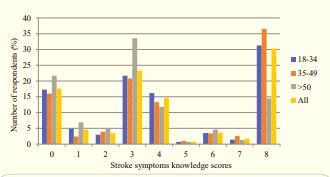
Figure 1a: Public stroke symptoms knowledge scores stratified by age.
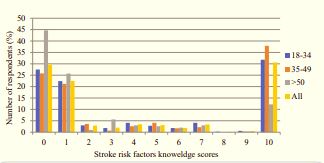
Figure 1b: Pubic stroke risk factors knoweldge scores stratified by age.
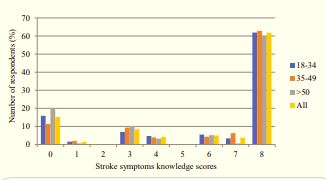
Figure 1c: Outpatients stroke symptoms knowledge scores stratified by age.
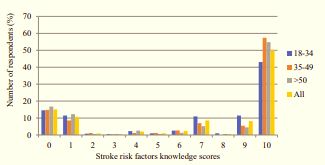
Figure 1d: Outpatients stroke risk factors knowledge scores stratified by age.
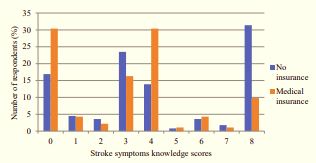
Figure 2a: VarioPublic stroke symptoms knowledge scores stratified by medical insuranceus
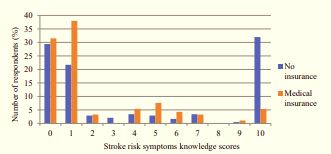
Figure 2b: Public stroke risk factors knowledge scores stratified by medical insurance
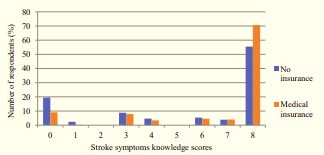
Figure 2c: Outpatients stroke symptoms knowledge scores stratified by medical insurance.
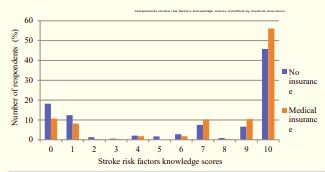
Figure 2d: Outpatients stroke risk factors knowledge scores stratified by medical insurance.
 Table 1
: Awareness of stroke symptoms among outpatients and public stratified by age.
Table 2
Table 2: Awareness of stroke risk factors among outpatients and public.
Our study is one of the sparse studies worldwide assessing knowledge and awareness of stroke symptoms and risk factors among public and outpatients concurrently, and it is the first study to assess knowledge based on medical insurance according to our knowledge. For stroke symptoms as well as stroke risk factors, including own risk factors, awareness and knowledge scores were higher among outpatients than the public. For stroke symptoms among all ages, outpatients had higher awareness than the public for dizziness/loss of balance, acute headache, blurred/double vision, speech impairment, and confusion. For stroke risk factors among all ages, outpatients had higher awareness than the public for dyslipidemia, obesity, smoking, heavy alcohol intake, heart diseases, and family history of stroke/heart diseases. Outpatients among all ages, had higher knowledge of stroke symptoms and risk factors than the public. Outpatients with or without medical insurance had higher knowledge of stroke than their counterparts among the public. Differences between the groups could be due to that outpatients are more frequently in contact with healthcare givers, are given more information about their diseases, and may have more interest in learning about their disease’s symptoms and risk factors.
Almost all outpatients (98.6%) in our study recalled at least one stroke symptom while 70.7% recalled at least four out of 8 symptoms. This is a higher rate compared to similar studies, ranging from 39.6-68% [9-10,15,17-21]. In our study as in several other studies [15,17-21], the most frequently recalled symptoms were numbness/dead sensation on one side of the body (hemiparesthesia, 85.7%), weakness of the body on one side (hemiparesis, 84.0%) and weakness of facial muscle on the lower part on one side (central facial palsy, 82.1%). Also, public respondents’ awareness of stroke symptoms was higher in our study (99.0% recalled at least one stroke symptom), compared to other community-based studies, ranging from 25-88 % [10-13,25,27-28,30-38,40]. Among the public, the most frequently recalled symptoms were hemiparesthesia (82.1%), central facial palsy (78.4%), and hemiparesis (74.2%). This resonates with some studies that showed hemiparesis 14.4-62.2% [12-13,27-28,31-32,34,36-38] and numbness 14.2- 60.2% [11-13,32-33,35,38], but contrasts others that showed speech disturbances 6.3-38.0% [12, 27-28,32-34,37-38], vertigo 6.3-26.0% [11,13,25,31-32,35-36,38] and headache 2.7-26.5% [11,25,28,31,34-36] as the most common symptoms.
About 9 out of 10 outpatients for all-age group recalled at least one stroke risk factor, which is higher than in comparable studies [9-10,15,18-22]. As in other studies [15,18-20,22], the most frequently recalled risk factor was hypertension (85.4%). In contrast, others showed dyslipidemia (8.5-34.7%) [15,18-21] and diabetes (7.3-22.8%) [15,22] as the most recalled risk factors but at lower rates. For the public, 85.5% recalled at least one risk factor while some previous studies presented 16.2-94% [9- 13,23,25,30-31,33-37,39-40]. In our study, the most frequently recalled risk factor was hypertension (70.2%), which also has been found in several other studies [11-13,23,27,31,33,35- 39], but contrasts some that revealed smoking 22-59.6% [12- 13,23,25,33-35,37,39], and obesity 20.9-45.9% [31,37-39] as the most common risk factor
Our study demonstrated higher awareness of own stroke risk factors among outpatients than the public for the following: among all ages for family history of heart diseases/stroke, and smoking, among age >50 years for sedentary lifestyle, over weight and obesity, and among 18-34 years for overweight. This contrasts with some previous studies that showed lower awareness rates among outpatients than the public [9,11,15-16,20]. Among hypertensive respondents, 78.0% among all-age group recalled hypertension as a stroke risk factor, whereas lower rates by other studies (57% and 22%) [11,20], but a higher rate (95.7%) in a Nigerian study [24]. Among smokers in public, 27.3% recalled smoking as a risk factor, which was almost similar to some public studies, (35% and 22.2%) [11,24], while for our outpatients who smoke, 70.5% recalled it as risk factor which was higher than Dominicis et al (8.5%) [20]. Also, for obesity [20,24], the awareness rates were higher in our study. Variations between studies can be explained by population differences (time of study, place, type of respondents, age and gender distribution, and nature of questions, like closed-ended).
Among the public, those without medical insurance had higher awareness than those with for acute headache, blurred/ double vision and confusion as stroke symptoms, and for diabetes, smoking, heavy alcohol intake, previous stroke, and family history of stroke/heart diseases as stroke risk factors. On the contrary among outpatients, those with medical insurance had higher awareness than those without for previous stroke. Among the public with obesity, those without medical insurance were more aware than those with that obesity is a risk factor of stroke. This shows that the public without medical insurance is more aware of uncommon stroke symptoms and healthy lifestyle behaviours related risk factors of stroke compared to outpatients. Reasons are unknown to us since one would have expected those with medical insurance to be more aware due to that they are paying for healthcare services.
In our study among both the public in general and the public without medical insurance, lower knowledge of stroke symptoms was associated with male gender, and age >50 years. This is in line with some public open-ended studies that showed higher age [10,26,29,38], and male gender [27,30] were associated with lower knowledge. This, as in our study is also supported by other studies that showed female gender [11-13,33], and young age [11,13,25,32] were associated with higher knowledge even though they were not stratified for medical insurance. But it contrasts other studies [14,33-34] that demonstrated higher age was associated with higher knowledge. Among both outpatients and outpatients with medical insurance, primary education was associated with lower knowledge while among the public, there was no association. This contrast some public studies that demonstrated low education [10-14,25,27,29-30,31- 34,38,40] was associated with lower knowledge and some that showed high education [11-14,25,31-34,40] was associated with higher knowledge. For outpatients, this contrasts with some studies that showed the association of lower education with lower knowledge [15,17-18,20], and higher education with higher knowledge [15,17-18,20]. Among outpatients, our study did not show any association of knowledge with gender or age except for outpatients without medical insurance where lower knowledge was associated with female gender, and for outpatients with medical insurance where lower knowledge was associated with age >50 years. This partly resonates with other studies that showed lower knowledge was associated with gender [21], and some that showed association between young age and higher knowledge [15,19] even though they were not based on medical insurance. Among both the public and outpatients, in addition to both public and outpatients without medical insurance, lower knowledge of stroke symptoms was associated with family history of stroke. Among both the public in gener- al and public without medical insurance, lower knowledge of stroke symptoms was also associated with hypertension, family history of both stroke and heart diseases, and history of HIV/ AIDS, while among both outpatients and outpatients with medical insurance, it was no family history of stroke/ heart diseases. In addition, among outpatients with medical insurance, it was history of hypertension. Our study contrasts other studies that demonstrated history of hypertension [11-13], and family history of stroke [31,40] were associated with higher knowledge of stroke symptoms. This contrasts also another study from Malawi [27] that could not find any association between history of HIV/AIDS and knowledge level. Among both the public and outpatients, lower knowledge of stroke symptoms was associated with underweight, and normal BMI. In addition, among both public and outpatients without medical insurance, lower knowledge was associated with normal BMI, while among outpatients with medical insurance it was underweight. This is partly in line with one public study that demonstrated association of obesity [31] with higher knowledge. Differences in studies is also contributed by that other studies were not stratified by medical insurance in addition to population differences.
Among public without medical insurance, lower knowledge of stroke symptoms was associated with not residing together, family history of heart diseases, current smokers, current drinkers, no healthy diet, light physical activity, and moderate physical activity. This demonstrates that those at high risk for stroke have lower knowledge of stroke, therefore need to be targeted for stroke campaigns. Among both public and outpatients without medical insurance, lower knowledge of stroke symptoms was associated with high physical activity. It is not clear why those who are healthy conscious do not have optimal knowledge of stroke.
Among both outpatients with and without medical insurance, lower knowledge was also associated with those married, residing together, healthy diet and history of psychiatric diseases. This demonstrates that those that stays together do not not necessarily share information or discuss healthy issues/matters. It also demonstrates that the healthy conscious outpatients by eating healthy foods do not necessarily have enough information about stroke. In short, both at risk and low risk groups do not have enough stroke knowledge. Among both the public in general and the public without medical insurance, lower knowledge of stroke risk factors was associated with >50 years, primary education, and history of hypertension. In addition, among the public in general, it was also associated with secondary education. This is in line with several open-ended studies [10,26- 27,29-30,38] which were not medical insurance based. On the other hand, we as well as others, found that tertiary education [11-14, 23,25,31,36,39-40], younger age [11-13,23,25,39], and obesity [31] were associated with higher knowledge among the public. Our study did not show any association of knowledge with family history of stroke among the public except among the public without medical insurance. Our study contrasts other studies [11-14,25,31,33-34,40] that demonstrated high age, history of hypertension, or family history of stroke were associated with higher knowledge of risk factors. Among outpatients, our study demonstrated lower knowledge was associated with young age (18-34 years) and family history of stroke but no association with education or history of hypertension. In addition, among outpatients without medical insurance, it was also associated with family history of stroke while among outpatients with medical insurance, it was associated with primary education. This contrast patients’ studies that showed higher knowledge was associated with lower age, and family history of stroke while partly with high education [15,18-20,22] despite that they were not based on medical insurance. In addition, like one public study, our study showed that among both the public in general and the public without medical insurance, lower knowledge was associated with those not residing/working together [39]. Our study did not demonstrate any association between knowledge and gender, while some studies demonstrated male gender was associated with lower knowledge [14,27,30]. Our study further showed that lower knowledge was associated with history of HIV/AIDS among both the public in general and the public without medical insurance while one study from Africa [27] did not show any association. Our study did not show any association of knowledge and those cohabiting/married unlike one aforementioned public study that demonstrated lower knowledge was associated with those not married/ cohabiting [27]. Nevertheless, our study demonstrated that among outpatients without medical insurance, lower knowledge was associated with those married/cohabiting. Differences in knowledge levels among studies can be explained by studies’ population differences (including the way knowledge was defined and analyzed in various studies) and that our study was also partly stratified by medical insurance.
Among both the public in general and the public without medical insurance, lower knowledge of stroke risk factors was associated with history of CVDS, family history of both stroke and heart diseases, family history of heart disease, current smokers, current and former drinkers, no healthy diet, while among both outpatients in general and outpatients without medical insurance, it was family history of stroke, staying/ working together, non-smokers, healthy diet, and history of psychiatric diseases. In addition, among outpatients, it was also associated with no medical insurance while among outpatients with medical insurance, it was with non-drinkers, healthy diet, history of psychiatric diseases and underweight. This shows that both at risk and non-risk subgroups need to be targeted if we are to reduce the burden of stroke in Sub-Sharan Africa.
Strength and limitations
All information from the questionnaires was collected through standardized face-to-face interviews. We compared our results with mostly previous open-ended studies for the public and patients. There are some limitations to this study. First, not all stroke symptoms and risk factors included in this study should not be weighted equally because some are easily identifiable and more common than others. Second, some subgroups had small samples, therefore, reducing statistical power to calculate differences. Third, despite all similarities and variations between studies, various studies considered better/ high knowledge differently with some considering awareness ranging from only 1 to 4 stroke risk factors or symptoms as high/ better knowledge while we resorted to lowest or highest mean score. Fourth, self-reported factors/characteristics are prone to bias. Lastly, there may be differences in demographic factors between responders and non-responders that we are unable to account for. Despite these limitations, very high response rates of 93.0% and 96.6% for public and outpatients respectively were attained and therefore these results represent current knowledge of the public and outpatients in Botswana.
Even though outpatients demonstrated higher awareness and knowledge of stroke symptoms and risk factors than the public, there are still gaps in awareness and knowledge of stroke that need to be addressed among various subgroups.
Our study calls for more education campaigns by policy makers and other stakeholders, targeting the population among various subgroups. Such campaigns must focus on all aspects of stroke, including prevention strategies and lifestyle intervention as well as early recognition of stroke symptoms and contact with EMS.
Acknowledgments
The authors thank the chief medical officers, hospital superintendents and their staff in greater Gaborone and the funders for this survey research study.
Funding
Botswana and Norway governments’ collaboration in the health sector. The funders had no role in the study methodology, data collection, analysis and interpretation, and producing the manuscript.
Grant number: not applicable.
Availability of data and materials
The datasets used and analyzed during the current study are available from the corresponding author on reasonable request.
Author Contributions
SHJ reviewed the manuscript, O.O wrote the manuscript. KKO, TRM, GM, YBB, BCL and MM were part of data collection. They helped with planning the paper, wrote some parts of the article, obtained relevant info from other journals for the discussion part. The author(s) read and approved the final manuscript.
Declarations
Ethics approval and consent to participate.
Ethical clearance for this study was granted in accordance with the Helsinki declaration for medical research from the following institutional review committees: Human Research Ethics of University of Botswana, Ministry of Health and Wellness in Botswana, Health Research and Development Division (ref. no. HPDME: 13/18/1) and Regional Committee for Medical Research Ethics South East Norway, section C (ref. 2018/774/REK), Norway. All eligible respondents were given oral and written information on the study including publication of the results, and written informed consent sought prior to inclusion in the study. Questionnaires were anonymous.
We always work towards offering the best to you. For any queries, please feel free to get in touch with us. Also you may post your valuable feedback after reading our journals, ebooks and after visiting our conferences.

