


| Received | : | June 04, 2026 |
| Accepted | : | June 22, 2026 |
| Published Online | : | Online: June 29, 2026 |
| Journal | : | Annals of Biotechnology |
| Publisher | : | MedDocs Publishers LLC |
| Online edition | : | http://meddocsonline.org |
Cite this article: Nageswara-Rao M, Gandahm P, Gopala VM, Tucker DA, Khoddamzadeh AA, et al. Unlocking the Genetic Potential of Florida’s Economically Important, Vulnerable, and Critically Imperiled Native Palms: A Transcriptomic Landscape Analysis. Ann Biotechnol. 2026; 9(1): 1033.
Native palm species are important components of Flor ida’s coastal ecosystems and ornamental horticulture, yet genomic resources for these taxa remain limited. In this study, we performed a comparative transcriptomic analy sis of three native Florida palms, Pseudophoenix sargentii, Sabal miamiensis, and Sabal palmetto, to generate foun dational molecular resources and examine transcriptional divergence among species. RNA sequencing of leaf tissues produced over 654 million raw reads of which approximate ly 577 million high-quality reads were retained after filter ing. De novo assembly yielded 455,094 contigs that were further filtered to 82,949 transcripts representing 42,834 non-redundant unigenes. Differential expression analysis revealed substantial transcriptional divergence among spe cies, with 6,038 Differentially Expressed Unigenes (DEUs) identified between the two Sabal species and more than 27,000 genes distinguishing each Sabal species from P. sargentii. Functional annotation and gene ontology enrich ment analyses indicated that many DEUs were associated with metabolic processes, transcriptional regulation, and stress-response pathways. Transcriptome mining also iden tified 10,145 Simple Sequence Repeats (SSRs) and 23,876 Single Nucleotide Polymorphisms (SNPs) within expressed gene regions, providing valuable molecular markers for fu ture genetic studies. Collectively, this study provides the first comprehensive comparative transcriptomic resource for these native Florida palms and establishes a foundation for future research on palm biology, conservation genet ics, and the development of molecular markers to support germplasm characterization and marker-assisted breeding in ornamental palms.
Keywords: Comparative gene expression; Germplasm charac terization; Molecular mechanisms and markers; Native species; Ornamentals; Transcriptomes.
Florida is one of the leading producers of ornamental plants in the United States, with its floriculture and landscape hor ticulture industries contributing substantially to the state’s economy. These sectors generated $21.08 billion in total out put, supported 232,648 jobs, and contributed $13.17 billion in value-added benefits [1]. Sustaining this growth depends heavily on the continuous development and availability of new, locally adapted germplasm to meet evolving consumer prefer ences. Among ornamental plants, palms, woody ornamentals, and flowering species have collectively driven a 13% increase in wholesale value since 2018, with palms emerging as particu larly iconic elements of tropical and subtropical landscapes in Florida and globally [2-4].
Beyond their aesthetic appeal, palms play a central role in shaping urban and natural landscapes. Once used primarily as accent plants, they are now integral components of urban for ests, contributing to cultural identity, ecological stability, and tourism economies in tropical regions [4-6]. Their commer cial success is further supported by practical advantages over broadleaf trees, including efficient space utilization due to their columnar growth habit, reduced maintenance requirements, and resilience during transplantation. These attributes make palms highly desirable for landscaping applications ranging from urban infrastructure to commercial developments [6-10]. In addition, palms hold deep cultural significance across tropical and subtropical regions, symbolizing peace, fertility, and pros perity [11]. Southern Florida, particularly Miami-Dade County, serves as the epicenter of this industry, accounting for over $7.5 billion in sales and hosting approximately 2,400 registered nurs eries specializing in tropical ornamentals (https://sfyl.ifas.ufl. edu/miami-dade/agriculture/ornamental-production/).
However, the rapid expansion of the ornamental plant trade has raised concerns regarding biodiversity loss, invasive species introduction, and climate vulnerability. Florida is especially sus ceptible, with nearly 1,400 non-native plant species now estab lished in the state [12-15]. In contrast, only twelve palm species are native to Florida, yet these species play critical ecological roles and hold significant economic value [11,16,17]. For exam ple, Sabal palmetto, the state tree of Florida and South Caro lina, is highly resilient to extreme weather conditions, including hurricanes, and remains widely cultivated [18]. Pseudophoenix sargentii contributes to coastal stabilization and wildlife habi tat, while the critically endangered Sabal miamiensis, endemic only to the Atlantic Coastal Ridge of southeastern Florida, oc curs on alkaline substrates in pine rocklands and scrub [19]. These native palms are increasingly valued for their exceptional tolerance to environmental stresses such as salinity, drought, flooding, fire, and temperature extremes [10,11,17,20].
Despite their importance, native palm populations are un der increasing pressure due to overharvesting and habitat loss. Several species now require harvesting permits, including P. sargentii, Roystonea regia, and Thrinax radiata, while S. miam iensis was believed to be extinct the wild before being rediscov ered recently [21,22]. These challenges highlight a critical gap in conservation and breeding efforts, compounded by the lack of molecular and genomic resources for native palms. In contrast to well-studied species such as date palm (Phoenix dactylifera), oil palm (Elaeis guineensis), and coconut (Cocos nucifera), na tive Florida palms remain largely uncharacterized at the genetic level [7,8,23]. Currently, no chromosome-scale genome assem blies exist for these species, and transcriptomic data remain limited, restricting efforts to understand stress tolerance and adaptive traits [7,8,23].
In the absence of reference genomes, de novo RNA sequenc ing provides a powerful approach for generating comprehen sive transcriptomic resources in non-model species [24]. Tools such as Trinity enable the reconstruction of full-length tran scripts and facilitate downstream analyses, including gene ex pression profiling and functional annotation [25,26,27]. In this study, we present the first de novo transcriptome assemblies for three ecologically and economically important native Florida palm species, P. sargentii, S. miamiensis, and S. palmetto, based on leaf RNA-seq data. Our objectives were to establish foun dational transcriptomic resources and identify differentially expressed genes and biological pathways underlying species specific adaptations. This research will support conservation of endangered palm species, improve selection of resilient native palms, sustainable plant breeding, and strengthen ornamental nursery and landscaping industries for the future.
Plant materials and tissue sampling
Individuals of P. sargentii, S. miamiensis, and S. palmetto were cultivated at the USDA-ARS Subtropical Horticultural Research Station in Miami, Florida (25.6421°N, 80.2944°W). To ensure consistency and tissue health, leaf tissue was collected from the youngest fully expanded frond adjacent to the spear leaf of mature palms, avoiding specimens showing signs of mechanical damage or pathogen infestation. Approximately 50 mg of young green leaf tissue was excised from three different individuals of each of P. sargentii, S. miamiensis, and S. palmetto. The cleaned tissues were immediately flash-frozen in liquid nitrogen to pre serve RNA integrity and stored at −80 °C until RNA extraction.
RNA purification, RNA-Seq library preparation, and sequencing
Total RNA was isolated from the young leaf tissue of each species using the Cetyltrimethylammonium Bromide (CTAB) ex traction method as described by [28]. The RNA concentration and integrity were assessed by fluorometric quantification with a Qubit system (Thermo Fisher Scientific, Carlsbad, CA) and by examination on a 1% agarose gel. RNA-Seq libraries were con structed for P. sargentii, S. miamiensis, and S. palmetto using 4 µg of total RNA, following the standard protocol supplied with the TruSeq RNA Library Preparation Kit (Illumina Inc., San Di ego, CA). The resulting cDNA libraries were quantified using the Qubit Broad Range Assay and quality verified using an Agilent 2100 Bioanalyzer (Agilent Technologies, Santa Clara, CA) with DNA-specific chips. Paired-end sequencing was performed on an Illumina HiSeq high-throughput platform at the University of Illinois Roy J. Carver Biotechnology Center. All sequence reads were submitted to the public NCBI Sequence Read Archive da tabase under BioSample accessions PRJNA1465365.
Sequence data processing
Sequence data were processed following established bioin formatic pipelines [29,30]. Raw sequence reads were evaluated using FastQC v0.12.1 to monitor quality metrics. Low-quality reads and adapter sequences were removed with Trimmomat ic v0.39 [31] using the parameter SLIDINGWINDOW:4:15 and reads shorter than 50 bp were discarded. High-quality reads were assembled de novo using Trinity v2.15.1 [26]. To mitigate redundancy, sequence clustering was conducted with CD-HIT EST [32]. Assembled transcripts were screened against the Rfam database [33] to identify and remove noncoding RNA sequenc es. Open Reading Frames (ORFs) were predicted using TransDe coder, and only transcripts containing valid ORFs were retained for downstream analyses.
Differential expression of unigenes
Unigene expression levels were quantified using RSEM [34] based on the generated transcriptome reference. Differential expression analysis was performed using DESeq2 [35] with significant thresholds set at |log2 fold change| ≥ 2, p ≤ 0.05, and Padj ≤ 0.001. Volcano plots were generated for each spe cies comparison employing the EnhancedVolcano R package, illustrating the distribution of significantly upregulated and downregulated unigenes. Global expression trends across all combinations were visualized as heatmaps using the Pheatmap package in R.
Functional annotation and enrichment of unigenes
Functional characterization of unigenes was achieved through homology-based searches using BLASTn and BLASTx against the NCBI RefSeq plant nucleotide and protein data bases and the Viridiplantae subset of the Swiss-Prot database with an e-value threshold of 1e−06. Protein domain annotation was conducted using HMMER v3.3.2 (http://hmmer.org) with searches against the Pfam database (https://www.ebi.ac.uk/ interpro/download/pfam/). Further functional annotation, in cluding Gene Ontology (GO) classification, was performed us ing InterProScan (https://www.ebi.ac.uk/interpro/download/ interproscan/). GO enrichment analysis utilized Fisher’s exact test implemented in the topGO R package and GO terms with p ≤ 0.05 were considered significant. The involvement of unige nes in metabolic and signaling pathways was discerned through the Kyoto Encyclopedia of Genes and Genomes (KEGG; https:// www.genome.jp/kegg/) using the KOALA annotation tool.
Identification of simple sequence repeats (SSRs)
Microsatellite loci within the unigene dataset were identi fied using MISA software following the procedure described by [36]. SSR motifs of di-, tri-, tetra-, penta-, and hexanucleotide repeats with a minimum occurrence of five repeat units were catalogued for further analysis.
Detection of single-nucleotide polymorphisms (SNPs)
High-quality reads were aligned to the assembled transcrip tome using the HISAT2 aligner [37] to facilitate the identifica tion of sequence variants. SNPs were detected using the Free Bayes variant calling pipeline and filtered to include loci with a minimum read depth of three. Both biallelic and multiallelic SNPs identified across P. sargentii, S. miamiensis, and S. palmet to were functionally annotated using SNPEff with a custom-built reference database.
Transcriptome sequencing and assembly
 Table 1
Table 1: The summary stats of raw and filtered reads from native palms.
A total of 654,957,478 reads were generated across P. sar gentii, S. miamiensis, and S. palmetto (Table 1). After quality filtering and adapter trimming, 576,952,156 high-quality reads were retained, corresponding to an average retention rate of 88.25%. The number of retained reads per species ranged from 176.9 million in S. miamiensis to 213.7 million in S. palmetto. The high retention rate (>86%) across all libraries indicate good sequencing quality and minimal adapter contamination.
Table 2
Table 2: Summary statistics of the de novo transcriptome of native palm species.
De novo assembly generated 455,094 contigs with a total assembled length of 397.6 Mbp (Table 2). The raw assembly exhibited a mean contig length of 874 bp, a median length of 829.5 bp, and an N50 of 1,460 bp. Following redundancy re duction and post-assembly filtering, the final assembly was substantially refined to 82,949 transcripts with a total length of 130.9 Mb. Assembly quality improved notably after filtering, as reflected by the increase in mean contig length to 1,577.9 bp and N50 to 2,146 bp, despite a reduction in overall contig number. The filtered assembly retained 42,834 non-redundant unigenes, representing a more compact and biologically mean ingful transcript catalog.
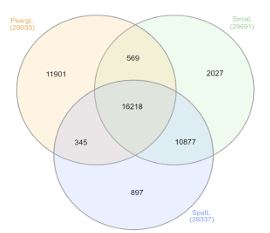
Figure 1: Dot plot of the enriched biological processes GO terms annotated to the DEUs in (A) S. miamiensis vs P. sargentii, (B) S. mi amiensis vs S. palmetto, and (C) S. palmetto vs P. sargentii. The size of each dot is proportional to the number of genes associated with the corresponding GO term and color gradience is with respect to the p-value.
Pairwise differential expression analysis revealed clear tran scriptional divergence among the three native palm species (Figure 2; Supplementary Table 2). The comparison between S. miamiensis and P. sargentii yielded 28,611 DEUs (14,473 up regulated and 14,138 downregulated) (Supplementary Table 3). In contrast, a total of 6,038 differentially expressed unige nes (DEUs) were identified between S. miamiensis and S. pal metto, including 2,191 upregulated and 3,847 downregulated transcripts (Supplementary Table 4). Similarly, the comparison between S. palmetto and P. sargentii identified 27,306 DEUs, comprising 12,692 upregulated and 14,614 downregulated transcripts (Supplementary Table 5). The substantially larger number of DEUs observed in comparisons involving P. sargen tii indicates greater transcriptomic divergence between genera, whereas the relatively smaller number of DEUs between the two Sabal species reflects their closer evolutionary relationship and more conserved regulatory networks. The nearly balanced distribution of up- and downregulated genes in the intergeneric comparisons suggests extensive transcriptional reprogramming rather than a directional bias in gene regulation.
A total of 1,985 DEUs were shared across all comparisons, representing a core set of genes consistently differentiating the three species (Figure 3, Supplementary Table 2). The largest group of unique DEUs was detected in the S. miamiensis vs P. sargentii comparison (22,192), followed by 1,540 unique DEUs in S. palmetto vs P. sargentii and 319 unique DEUs in S. miam iensis vs S. palmetto. Additionally, 2,289 DEUs were shared ex clusively between S. miamiensis vs P. sargentii and S. miamien sis vs S. palmetto, while 1,589 DEUs were shared between S. palmetto vs P. sargentii and S. miamiensis vs S. palmetto. An other 2,145 DEUs were common to the two comparisons in volving P. sargentii. The relatively small number of unique and shared DEUs between the two Sabal species further supports their close transcriptional similarity, whereas the large number of unique DEUs associated with P. sargentii likely reflects genus level divergence in gene regulation. Collectively, these results highlight both conserved and lineage-specific transcriptional signatures among the three native palm species.
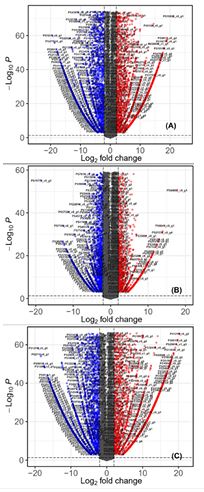
Figure 2: Volcano plot showing the Differentially Expressed Unigenes (DEUs) in (A) S. miamiensis vs P. sargentii, (B) S. miamien sis vs S. palmetto, and (C) S. palmetto vs P. sargentii. Black, red, and blue dots represent non-significant, significantly upregulated, and significantly downregulated DEUs, respectively, with - 2 ≤ log2FC ≥ 2 and -Log10P ≥ 1.3
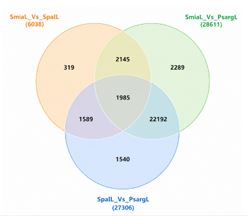
Figure 3: Venn diagram showing the number of Differentially Expressed Unigenes (DEU) among the native palms.
Gene ontology enrichment analysis of DEUs
Gene Ontology (GO) enrichment analysis of DEUs revealed coordinated functional divergence among S. miamiensis, S. pal metto, and P. sargentii (Figure 4, Supplementary Figure 1 and Supplementary Figure 2). Across all pairwise comparisons, en riched categories primarily involved biological processes asso ciated with biosynthesis, translation, nucleic acid metabolism, and stress-related pathways, consistent with patterns reported in comparative transcriptomic studies of non-model plant spe cies [38,39].
Biological processes
In the S. miamiensis vs P. sargentii comparison, upregulated DEUs were significantly enriched in organic substance biosyn thetic process (GO:1901576), organonitrogen compound bio synthetic process (GO:1901566), cellular biosynthetic process (GO:0044249), peptide biosynthetic process (GO:0043043), amide biosynthetic process (GO:0043604), ribosome assem bly (GO:0042255), and translation (GO:0006412) (Figure 4A, Supplementary Table 3). Downregulated DEUs were enriched in nucleic acid metabolic process (GO:0090304), DNA meta bolic process (GO:0006259), DNA replication (GO:0006260), DNA-dependent DNA replication (GO:0006261), DNA repair (GO:0006281), and RNA modification (GO:0009451). Similar trends were observed in S. palmetto vs P. sargentii, where de fense response to other organism (GO:0098542), immune re sponse (GO:0006955), and regulation of nucleic acid-templated transcription (GO:1903506) were prominent among upregulat ed DEUs, while DNA metabolic and replication-related process es were enriched among downregulated transcripts (Figure 4C).
In contrast, the comparison between the two Sabal spe cies showed relatively stronger enrichment of translational and ribosome-related processes among downregulated DEUs, including ribosome biogenesis (GO:0042254), gene expres sion (GO:0010467), and plant-type cell wall organization (GO:0009664), whereas upregulated DEUs were associated with amino acid catabolic processes (GO:0009065) and small molecule metabolic processes (GO:0044282) (Figure 4B, Sup plementary Table 4). These findings suggest that divergence between genera is characterized by broader shifts in transcrip tional regulation and defense-associated pathways, while inter specific variation within Sabal is driven primarily by metabolic and translational modulation.
Cellular components
Enriched cellular component terms further supported these patterns. Comparisons involving P. sargentii showed significant enrichment of ribosome (GO:0005840), cytosolic ribosome (GO:0022626), ribosomal subunit (GO:0044391), cytoplasm (GO:0005737), and plasma membrane (GO:0005886) among upregulated DEUs (Supplementary Figure 1A, 1C, Supplemen tary Table 3, 5). Downregulated transcripts were enriched in membrane-bounded organelle (GO:0043227), nucleus (GO:0005634), nuclear lumen (GO:0031981), and cytoskeleton (GO:0005856), indicating shifts in subcellular compartmental activity.
Between S. miamiensis and S. palmetto, enrichment of extra cellular region (GO:0005576), cell wall (GO:0005618), and mem brane-associated components (GO:0016020) were observed, suggesting structural and membrane-related divergence within the genus (Supplementary Figure 1B). Such compartment-level differences have been widely reported in comparative plant transcriptome analyses, particularly in studies investigating stress adaptation and lineage differentiation [25,40].
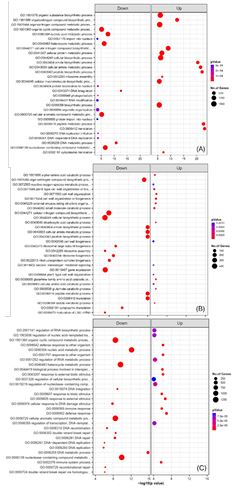
Figure 4: Dot plot of the enriched biological processes GO terms annotated to the DEUs in (A) S. miamiensis vs P. sargentii, (B) S. mi amiensis vs S. palmetto, and (C) S. palmetto vs P. sargentii. The size of each dot is proportional to the number of genes associated with the corresponding GO term and color gradience is with respect to the p-value.
Molecular functions
At the molecular function level, catalytic activity (GO:0003824), oxidoreductase activity (GO:0016491), nucleic acid binding (GO:0003676), DNA-binding transcription fac tor activity (GO:0003700), and transcription regulator activity (GO:0140110) were recurrently enriched across comparisons (Supplementary Figure 2, Supplementary Table 5). Intergeneric contrasts consistently showed stronger enrichment of transcrip tion factor and DNA-binding functions, along with oxidoreduc tase and monooxygenase activities (GO:0004497), suggesting greater regulatory and metabolic differentiation between Sabal and Pseudophoenix (Supplementary Figure 2A, 2C). Downregu lated DEUs were frequently associated with ATP-dependent ac tivity (GO:0140657), helicase activity (GO:0004386), and single stranded DNA binding (GO:0003697), indicating modulation of genome maintenance and nucleic acid processing pathways.
Collectively, the integrated Biological Processes (BP), Cellular Components (CC), and Molecular Functions (MF) enrichment patterns demonstrate that transcriptomic divergence among these native palms is largely driven by coordinated shifts in biosynthetic activity, protein synthesis, transcriptional regula tion, redox processes, and defense-related mechanisms. Com parisons involving P. sargentii showed stronger enrichment of regulatory and immune-associated functions, supporting great er functional divergence at the genus level relative to the two closely related Sabal species. Environmental stressors such as salinity and coastal habitat conditions are known to influence physiological responses in native palms, including S. palmetto and P. sargentii, potentially contributing to divergence in gene expression patterns [41]. Such enrichment trends are consis tent with previous de novo transcriptome studies in non-model plants, where differential regulation of translation, metabolic pathways, and stress-responsive genes underpins species-level adaptation [38,39].
A set of representative DEUs revealed consistent transcrip tional divergence among S. miamiensis, S. palmetto, and P. sargentii in leaf tissue (Table 3). Among the DEUs expressed in all three pairwise comparisons, several genes associated with phenylpropanoid and secondary metabolism exhibited strong and consistent differential expression across all contrasts (Table 3A). Trans-cinnamate 4-monooxygenase (PS1536_c0_g2) and a 2-oxoglutarate/iron-dependent dioxygenase (PS12726_c0_g1) showed substantial log2FC values in each comparison, indicat ing coordinated divergence in phenylpropanoid flux. C4H cata lyzes an early committed step in phenylpropanoid biosynthesis and regulates lignin and flavonoid production [42,43]. The 2-ox oglutarate-dependent dioxygenase superfamily plays broad roles in flavonoid modification and specialized metabolism [44], suggesting that secondary metabolite allocation differs among the three taxa.
Cell wall and redox-associated differences were further sup ported by the differential expression of a multi-copper oxidase (PS17938_c0_g1) and an anchored cell wall protein (PS89637_ c0_g1). Laccase-type multi-copper oxidases are central to lig nin polymerization and structural reinforcement of the cell wall [45], while apoplastic redox enzymes modulate oxidative bal ance in expanding tissues. The coordinated shifts observed in these transcripts imply divergence in structural and redox ho meostasis among the species.
Table 3
Table 3: Selected Differentially Expressed Unigenes (DEUs) distinguishing native palm species, (A) DEUs shared across all pairwise comparisons, (B) DEUs shared in both Sabal-Pseudophoenix comparisons.
Regulatory divergence was also evident at the signaling level. An auxin-responsive protein IAA17 (PS34528_c0_g1) was significantly differentially expressed in all three comparisons, indicating variation in auxin signaling regulation. AUX/IAA pro teins act as transcriptional repressors within auxin response pathways and integrate growth and stress signaling [46]. Simi larly, an ERECTA-like LRR receptor-like serine/threonine kinase (PS28858_c0_g1) and an LR10-related rust resistance kinase (PS41483_c0_g1) were differentially expressed across con trasts. ERECTA-family receptor kinases are known to coordinate developmental patterning and environmental responses [47], while LRR receptor kinases broadly mediate pathogen percep tion and downstream defense signaling. These findings suggest divergence in upstream perception and hormonal regulatory circuits in addition to downstream metabolic processes.
Nutrient and nitrogen-associated metabolism also contrib uted to species differentiation. An acid phosphatase-like pro tein (PS38151_c0_g1) displayed strong differential expression across comparisons, consistent with variation in phosphate remobilization and nutrient-use strategies [48]. Additionally, acetylornithine deacetylase (PS1824_c0_g2), involved in argi nine biosynthesis, showed consistent differential expression, implicating divergence in nitrogen metabolism. Arginine metab olism is closely linked to nitrogen storage and stress responses in plants [49]. Differential expression of myo-inositol oxygenase (PS28026_c0_g1) further indicates variation in carbohydrate metabolism and cell wall precursor pathways.
Among the genes consistently differentiating Sabal species from P. sargentii, several chloroplast-associated genes, includ ing photosystem II 22 kDa protein (PS1219_c0_g1), CP12-2 (PS9013_c0_g3), protochlorophyllide reductase C (PS19504_ c0_g1), and ferredoxin (PS11494_c0_g3), exhibited strong dif ferential expression in both Sabal-Pseudophoenix contrasts (Ta ble 3B). Chloroplast redox components such as ferredoxin and peroxiredoxin (PS18340_c0_g2) play central roles in photosyn thetic electron transport and reactive oxygen species buffering [50,51], indicating divergence in photosynthetic regulation and redox balance between genera. In parallel, flavonoid-associat ed genes such as flavonol synthase (PS10190_c0_g1) and nar ingenin 2-oxoglutarate 3-dioxygenase (PS32264_c0_g1) were consistently elevated in Sabal relative to Pseudophoenix, rein forcing divergence in photoprotective secondary metabolism [43,44]. Finally, annexin (PS251_c2_g1), a calcium-dependent membrane-associated protein implicated in stress and signal ing processes [52], further supports genus-level differences in signaling and membrane-associated stress responses.
Collectively, these DEUs indicate coordinated divergence in phenylpropanoid metabolism, cell wall and redox homeostasis, hormone and receptor-mediated signaling, chloroplast physiol ogy, and nutrient metabolism. Such integration of metabolic and regulatory differentiation is consistent with comparative tran scriptomic studies in other plant systems, where species-level divergence reflects coordinated shifts in signaling networks and downstream metabolic pathways [53,54]. The selected DEUs therefore provide biologically meaningful candidate loci under lying functional differentiation among these native palm spe cies.
Identification and characterization of SSRs in native palm transcriptome
Simple Sequence Repeats (SSRs) analysis identified 10,145 SSR loci from 42,834 assembled transcript sequences, rep resenting a total sequence length of 55,381,788 bp (Table 4). Among these sequences, 14,384 transcripts contained at least one SSR, while 5,029 sequences harbored more than one SSR, indicating the widespread distribution of microsatellites across the transcriptome. Such abundance of SSRs within expressed regions has been commonly reported in plant transcriptome datasets and provides valuable resources for marker develop ment and genetic studies [55,56].
Among the identified SSRs, dinucleotide repeats were the most abundant (5,752), followed by trinucleotide repeats (3,960), while tetranucleotide (332), pentanucleotide (55), and hexanucleotide repeats (46) were comparatively rare (Table 4). Similar patterns have been widely reported in plant EST or transcriptome-derived SSR studies, where di- and trinucleotide repeats typically dominate due to their relative mutational sta bility and frequent occurrence in coding regions [55,57]. In the present study, dinucleotide and trinucleotide repeats together accounted for 95.73% of the total SSRs, suggesting their major contribution to microsatellite variation within the native palm transcriptome.
Table 4
Table 4: Summary statistics of SSR and SNP identification in native palms.
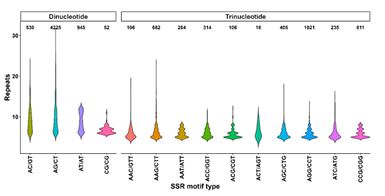
Figure 5: Repeat number distribution of dinucleotide and trinucleotide SSR motif types identified in native palms.
SSRs were further classified based on motif length into Class I SSRs (≥20 bp) and Class-II SSRs (10–20 bp). A total of 4,062 Class-I SSRs (40.03%) and 6,083 Class-II SSRs (59.96%) were detected (Table 4). Class-II SSRs were therefore more prevalent than Class-I SSRs, which is consistent with observations from other transcriptome-based SSR analyses where shorter repeat motifs are generally more frequent [56,58]. Only 34 SSRs oc curred in compound formation, indicating that most SSR loci consisted of simple repeat motifs.
The study of distribution of SSR lengths across different motif types showed dinucleotide repeats an average length of 26.19 bp in Class-I SSRs and 14.40 bp in Class-II SSRs, while trinucleotide repeats exhibited average lengths of 23.90 bp and 16.04 bp in Class-I and Class-II categories, respectively (Supple mentary Table 6). Tetranucleotide, pentanucleotide, and hexa nucleotide repeats were observed exclusively within the Class-I category with average motif lengths of 24.0 bp, 26.41 bp, and 34.9 bp, respectively.
The predominance of longer motifs within higher-order repeat classes is expected because larger motif units require fewer repeat iterations to meet the minimum length threshold for classification as SSRs. Similar length patterns have been re ported in transcriptome-derived SSR analyses of several plant species including coffee, Morinda officinalis, and Spartina alter niflora [29,59,60]. In our study, hexanucleotide repeats exhib ited the largest average length, which likely reflects their lower abundance but higher repeat stability within coding regions.
Considerable variation in repeat numbers was observed across motif types (Figure 5). Among dinucleotide repeats, mo tifs such as AG/CT and AC/GT exhibited the highest frequencies, indicating their strong prevalence within the transcriptome. In trinucleotide repeats, motifs such as AAG/CTT, AAT/ATT, and AGG/CCT were among the most frequent types. The predomi nance of AG/CT-type dinucleotide motifs and AAG/CTT-type trinucleotide motifs have been consistently reported across many plant species. For example, similar motif patterns were observed in coffee and Morinda officinalis, where AG/CT dinu cleotide repeats were the most abundant SSR motifs [59,60]. The high frequency of trinucleotide repeats in transcriptomic sequences is often attributed to their compatibility with coding regions because they do not disrupt the reading frame during replication slippage events [56]. Most SSR motifs exhibited re peat numbers ranging from approximately 5 to 12 repeat units, with a few motifs showing higher repeat counts. Previous ge netic studies have demonstrated considerable genetic varia tion within P. sargentii populations using microsatellite mark ers, suggesting that genomic variability may also contribute to observed transcriptional differences among related palm taxa [61]. Such variability in repeat number is a characteristic feature of microsatellites and contributes to their high level of polymor phism, making them valuable molecular markers for genetic di versity studies and marker-assisted breeding.
Identification and characterization of SNPs in native palm transcriptome
Single Nucleotide Polymorphisms (SNPs) were identified from the assembled transcriptome sequences to evaluate nu cleotide-level variation among the native palm datasets. A to tal of 23,876 SNPs were detected across 8,571 transcripts, re sulting in an average of 2.78 SNPs per transcript (Table 4). The transcript PS9893_C0_G1_I4 contained the highest number of SNPs, with 25 variants, indicating localized regions of high nu cleotide variability within the transcriptome.
Among the identified SNPs, 16,515 were transitions, while 7,361 were transversions (Supplementary Table 7), resulting in a Transition/Transversion (Ti/Tv) ratio of 2.24. The pre dominance of transitions over transversions is consistent with observations from many plant transcriptome studies, where transitions typically occur more frequently due to the higher likelihood of purine–purine and pyrimidine–pyrimidine substi tutions during DNA replication and repair processes [55,56,62]. In addition, 3,406 transcripts contained a single SNP, indicating that a large proportion of transcripts harbor limited nucleotide variation, while others accumulate multiple polymorphic sites. The distribution of SNPs across transcripts reflects both func tional constraints on coding sequences and the natural muta tional processes shaping genetic variation in plant genomes. Transcriptome-derived SNPs are particularly valuable as poten tial markers because they originate from expressed genes and may therefore be directly associated with functional traits or adaptive responses [55,62].
This study provides the first comprehensive transcriptomic characterization of three native Florida palm species, P. sar gentii, S. miamiensis, and S. palmetto, offering new insights into their genetic architecture and transcriptional divergence. Comparative transcriptome analysis revealed conserved and species-specific gene expression patterns associated with meta bolic regulation, stress response, and developmental processes, highlighting potential molecular mechanisms underlying eco logical adaptation among these native palms. The transcrip tome resources generated in this work substantially expand the currently limited genomic information available for Florida’s native palm species and establish an important foundation for future functional genomics and conservation studies. These da tasets also provide valuable genetic resources that can facilitate germplasm characterization, molecular marker development, species restoration, and marker-assisted breeding efforts aimed at improving resilience and sustainability in ornamental palm cultivation as well as conservation biology.
Acknowledgements
This research was supported through appropriated funds from the United States Department of Agriculture - Agricul tural Research Service (USDA-ARS) under Project Number 6038 13210-004-000-D and study conducted under Non-Assistance Cooperative Agreement (6038-21000-026-006-S). This research was supported by an appointment to the Agricultural Research Service (ARS) Research Participation Program at the U.S. De partment of Agriculture (USDA), administered by the Oak Ridge Institute for Science and Education (ORISE) through an inter agency agreement between the U.S. Department of Energy (DOE) and the USDA-ARS.
Authors’ contributions
MNR, PG, and VMG analyzed and visualized the data and drafted the manuscript. MNR, DT, and AK conducted field col lections, obtained permits, and supported experimental work and literature review. MNR and NB performed quality control, data analysis and investigations, as well as manuscript editing. All authors reviewed and approved the final manuscript. MNR acquired USDA-ARS funding, NB obtained NACA funding and provided logistical support. The authors declare no competing interests.
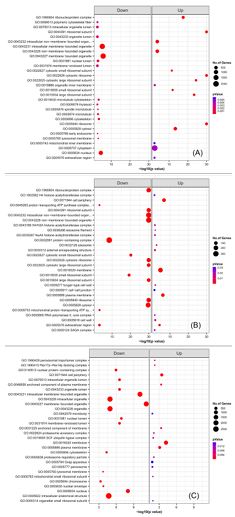
Supp Figure 1: Dot plot of the enriched cellular components (CC) GO terms annotated to the DEUs in (A) Sabal miamiensis vs Pseudophoenix sargentii, (B) Sabal miamiensis vs Sabal palmetto, and (C) Sabal palmetto vs Pseudophoenix sargentii. The size of each dot is proportional to the number of genes associated with the corresponding GO term and color gradience is with respect to the p-value.
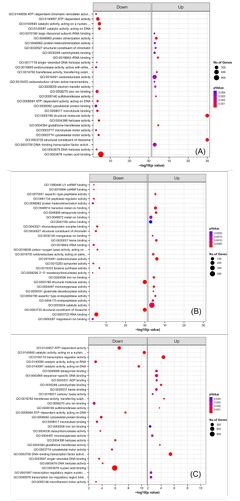
Supp Figure 2: Dot plot of the enriched Molecular Function (MF) GO terms annotated to the DEUs in (A) Sabal miamiensis vs Pseudophoenix sargentii, (B) Sabal miamiensis vs Sabal palmetto, and (C) Sabal palmetto vs Pseudophoenix sargentii. The size of each dot is proportional to the number of genes associated with the corresponding GO term and color gradience is with respect to the p-value.
We always work towards offering the best to you. For any queries, please feel free to get in touch with us. Also you may post your valuable feedback after reading our journals, ebooks and after visiting our conferences.

